Last updated November 18, 2026








Free written scope consultation - allowances, timeline, and change-order rules on paper before a single trade is scheduled
General Contractor Maintenance Checklist for Santa Clarita Homeowners
The number-one source of insurance claims on Santa Clarita homes isn’t fire or flood. It’s water intrusion through dried-out caulk and failing stucco joints that baked and cracked over three consecutive 105°F weeks. That’s a $40 caulking gun problem that becomes a $12,000 drywall problem once the first winter rain finds the gap. Most maintenance checklists were written for a national average climate that doesn’t exist here. This one is built around what actually fails first in the Santa Clarita Valley, season by season, with the tasks that legally require a licensed contractor spelled out and the paperwork that protects your warranty and insurance when something does go wrong.
Quick Answer
Santa Clarita homeowners should inspect stucco and caulk joints every April before heat season, clean and test drainage every July before monsoon moisture, and audit window and door seals every October before Santa Ana winds arrive. Pair those three seasonal checkpoints with an annual roof and attic walk-through, and you’ll catch the failures that drive most SCV repair bills. Tasks involving stucco repair, roofing membrane, electrical, gas, and structural work require a licensed California contractor; caulking, filter changes, and gutter clearing are genuine DIY.
Styles & brands we work with
- Kitchen remodeling
- Bathroom remodeling
- Home additions & ADU
- Roofing
- Windows & doors
- Driveway & pavers
- Fence
Table of Contents
- Why Santa Clarita Maintenance Isn’t Like Anywhere Else
- The Month-by-Month Santa Clarita Maintenance Calendar
- DIY vs. Licensed Contractor: What California Law Actually Requires
- The Annual Walk-Through: Red Flags a GC Sees That You Won’t
- How to Document Maintenance So It Protects Your Warranty and Insurance
- How to Get a Written Maintenance Assessment, Not a Sales Pitch
- Common Mistakes to Avoid
- When to Call a Professional
Why Santa Clarita Maintenance Isn’t Like Anywhere Else
Santa Clarita sits in a high-desert-influenced valley that swings harder than the coastal California most maintenance advice is written for. Summer afternoons regularly push past 105°F in Newhall and Canyon Country. Relative humidity can drop into single digits during a September heat wave, then climb sharply when monsoon moisture creeps up from the Gulf of California. And several times a year, Santa Ana wind events rake the valley with gusts that find every loose shingle, window seal, and fence post.
What that climate does to building materials is predictable once you’ve watched it for a while. Exterior caulk loses elasticity after a couple of brutal summers and pulls away from stucco at the joints around windows, hose bibs, and light fixtures. Stucco itself develops hairline cracks as the substrate behind it expands and contracts. Wood fencing and decking dry and check. Irrigation lines and hose bib connections that sat pressurized through the summer can split on the first cold night.
In our experience, the failures we see on Santa Clarita homes cluster into three families: water finding a path through a failed seal, wind pulling something loose that was already compromised, and heat cooking the useful life out of anything rubber or plastic on the exterior. Around Saugus and Valencia, where a lot of the housing stock went up in the 1980s and 1990s, the original caulk and window flashing are now well past their expected service life.
The practical upshot: a national maintenance calendar tells you to “check your roof in spring.” A Santa Clarita calendar tells you to check your caulk in April, before the heat takes it apart, and to check your roof and attic ventilation in the same pass because the two fail together here.
The Month-by-Month Santa Clarita Maintenance Calendar
Here’s the schedule we recommend to homeowners across the Santa Clarita Valley. It reorders priorities around what actually fails first, not around what a national home-improvement site assumes about your climate.
April: Pre-Heat-Season Stucco and Caulk Inspection
- Walk the exterior of the house and look closely at every joint where caulk meets stucco, especially around windows, doors, hose bibs, dryer vents, and exterior light fixtures.
- Press a fingernail into the caulk. If it’s hard, cracked, or pulls away from either surface, it needs replacing before summer bakes it further.
- Look for hairline cracks in the stucco field. Hairlines under a sixteenth of an inch are usually cosmetic; wider or stair-stepping cracks deserve a contractor’s eye.
- Check that window and door flashings are still shedding water away from the wall, not trapping it.
- Confirm attic vents and roof-edge vents are clear of debris before the heat season starts.
July: Monsoon-Prep Drainage Check
- Clear gutters and downspouts of the debris that collected over the dry months.
- Test that downspouts discharge at least several feet away from the foundation, not against the stucco.
- Check grading and hardscape joints. Pavers set in the Belgard and Unilock lines we install are built to move slightly; a joint that’s washed out needs re-sanding before the next storm.
- Inspect the roof for lifted or missing shingles and any bubbling on flat TPO sections.
- Confirm window well drains and area drains flow freely.
October: Santa Ana Wind Window-and-Door-Seal Audit
- Open and close every exterior door and window. If daylight shows through, the weatherstripping has compressed or failed.
- Check door sweeps and thresholds for gaps; these are the first thing wind finds.
- Confirm shutters, awning brackets, patio covers, and fence panels are firmly anchored before the wind season.
- Inspect roof-edge fascia and soffit for loose pieces the wind could catch.
- Test that any exterior light fixtures, hose bibs, and utility penetrations are still sealed tight.
Year-Round / Annual
- Roof and attic walk-through once a year, ideally in late fall.
- HVAC filter changes on the schedule the manufacturer specifies, more often through Santa Clarita’s dust season.
- Water heater and supply-line inspection once a year.
- Exterior paint and stain touch-up every few years, before the sun gets ahead of you.
DIY vs. Licensed Contractor: What California Law Actually Requires
One of the most useful things a homeowner can learn is where the DIY line actually sits. California law is specific about this, and getting it wrong can void insurance coverage or a warranty on a job that looked simple.
Genuine DIY territory includes caulking, gutter clearing, filter changes, minor paint touch-up, and hardware swaps. These don’t require a license and rarely void anything.
Licensed-contractor territory, by contrast, is defined by the type of work, not by how small it feels. Common license classifications in Santa Clarita home maintenance include:
- C-33 Painting and Decorating for exterior painting that involves surface prep, stucco patching, and coating systems.
- C-35 Lathing and Plastering for stucco repair beyond cosmetic hairline cracks, including patching and re-flashing around penetrations.
- C-39 Roofing for any roof membrane, shingle, or flashing work, including the TPO flat sections common on some SCV homes.
- B General Building for projects that involve multiple trades, structural work, or anything that could affect the home’s framing or envelope.
- C-10 Electrical and C-36 Plumbing for wiring, panel, gas line, and supply/drain work, which are not homeowner tasks in any state.
California’s Contractors State License Board requires a licensed contractor for work over the statutory threshold (currently $500 in labor and materials combined). Window replacement, stucco patching on a wall that carries a window, water heater replacement, and anything involving gas lines all fall on the licensed side. If a contractor offers to do licensed-scope work without a license number, that’s the moment to walk away.
That’s also why we pull permits and pass inspections on every project we take on. Permit records become part of the home’s paper trail, and they matter later when you sell, refinance, or file a claim.
The Annual Walk-Through: Red Flags a GC Sees That You Won’t
A homeowner walking their own house for the first time sees the visible things: cracked paint, a shingle that’s missing, a stain on the ceiling. A contractor doing an annual walk-through sees the systems behind the visible things. These are the four we look for first on Santa Clarita homes.
Truss Uplift Gaps
Look at the interior ceiling where it meets an interior wall. If there’s a clean, straight gap opening and closing with the seasons, that’s often truss uplift: the roof trusses lift slightly in cold, dry weather and settle in warm, humid weather, pulling the ceiling drywall up with them. It’s usually cosmetic, but it can also mask a fastening problem or an attic ventilation issue. We see it on a lot of 1990s-era construction around Valencia and Stevenson Ranch.
UV-Degraded Expanding Foam
Expanding foam that sits exposed to Santa Clarita sun degrades fast. Look for foam around exterior penetrations (hose bibs, dryer vents, utility lines, conduit) that has turned chalky, crumbly, or orange-brown. Once the foam breaks down, it stops sealing and starts letting water and insects in.
TPO Roof Membrane Bubbling
On flat or low-slope roof sections, TPO membrane should sit flat. Bubbles, ridges, or open seams mean the adhesive underneath has failed, or water is getting beneath the membrane and the sun is turning it to steam. This is a repair-now problem, not a next-year problem.
Stucco Cracks That Follow a Pattern
Hairline cracks in stucco are normal. Cracks that stair-step diagonally, reappear after repair, or show a rust stain or moisture trail are telling you something is moving or water is getting behind the wall.
How to Document Maintenance So It Protects Your Warranty and Insurance
Documented maintenance does three jobs at once: it protects your builder warranty (which almost always requires proof of upkeep), it supports any homeowner’s insurance claim by showing the damage wasn’t caused by neglect, and it makes a future sale go smoother. Here’s how to build that record without overthinking it.
- Date every photo. Take photos on your phone with location and date tagging on. Name the files by area and date.
- Keep the receipts for anything a contractor touched. That includes caulk, stucco patch, and roof repair. A receipt from a licensed contractor is the strongest warranty evidence there is.
- Log every permit and inspection. If a project required a permit, keep the permit number and the final inspection sign-off.
- Save your own walk-through notes. Even a notebook with a date and a few lines (“April: caulk around kitchen window replaced”) is enough.
- Get written assessments, not verbal. A written maintenance assessment from a licensed contractor becomes a dated record of the home’s condition at a point in time.
When you have a kitchen or bathroom remodel done, we always leave the written price, the guarantee, and the permit records with the homeowner. That paperwork stack is exactly what a warranty claim or insurance adjuster will want to see years later. For the larger remodeling projects, our Kitchen Remodeling in Santa Clarita team usually builds the final walk-through into the handoff so all that documentation is in one place.
How to Get a Written Maintenance Assessment, Not a Sales Pitch
A maintenance assessment and a sales visit are different things, and you can tell them apart within the first ten minutes. A sales visit steers toward a project. A written maintenance assessment is a document that tells you the current condition of the home and what’s likely to fail next, with a written price attached to each item whether you take it or leave it.
Here’s what to ask for so you get the second one:
- Ask for a written, line-item document that lists each observation, its location, and a price range for repair. Not a ballpark, not a verbal estimate. A written number you can hold a contractor to.
- Ask for priorities. A good assessment separates “do now” from “monitor” from “this can wait.” Anything that doesn’t have a failure timeline attached is a sales pitch.
- Ask what happens if you don’t fix it yet. An honest contractor will tell you which line items can safely wait a season, and which will get more expensive every month.
- Ask for the guarantee in writing. Every project under our 365-Day Done Right Promise is backed in writing: if the work fails inside the guarantee period, we come back and fix it at no charge. If a repair fails, there’s a free return visit, no service-call fee. You should expect that in writing before any work starts, not after.
- Ask who will be in your home. At Penhallow, every technician is background-checked and arrives in uniform, so you know exactly who’s walking through your door.
Our full service bench lives on our General Contractor in Santa Clarita page; that’s the right place to start if the assessment turns up something bigger than caulk and flashing.
Common Mistakes to Avoid
- Using interior caulk on exterior joints. The sun and heat will destroy it in a season. Exterior joints in Santa Clarita need paintable exterior-grade caulk or a urethane sealant rated for high UV.
- Ignoring hairline stucco cracks through the summer. They widen. By the time a crack is a quarter-inch, water has already been behind the wall.
- Painting over stucco without prep. A coat of paint over failed caulk and chalky surface looks better for six months and then fails faster than the original.
- Letting the HVAC filter go all summer. Santa Clarita dust season fills a filter faster than the manufacturer’s 90-day chart assumes. Check monthly from June to October.
- Skipping the roof because “it’s only ten years old.” Age isn’t the whole story here. Heat and UV do more work than calendar years on a Santa Clarita roof.
- Hiring the first contractor who answers and offering a verbal “ballpark” as a contract. Without a written price, you’re not committed to anything, and neither is the contractor.
- Forgetting the fence panels before the first Santa Ana wind event. Loose posts and thin pickets that came through one wind season won’t come through the next. The ActiveYards and Belgard fence and hardscape systems we install are chosen partly for how they hold up in wind and heat.
When to Call a Professional
Not every item on this checklist needs a contractor. Call one when stucco cracks are wider than a sixteenth of an inch, when roof membrane or flashing is compromised, when water has reached the interior, when the roof is over twenty years old, when truss uplift gaps are opening and not closing seasonally, or when you’re not sure you can make the repair right the first time. Each of those is a scenario where the cost of doing it twice is higher than the cost of doing it once.
Penhallow Remodeling Santa Clarita offers free written estimates in Santa Clarita. Call (866) 383-6693 and a live person answers, any time, without a voicemail maze. We’ll walk the house, hand you a written assessment with line-item prices whether you hire us or not, and leave the numbers in writing so you can decide without a sales visit hanging over you.
If the assessment turns into a bathroom project, our Bathroom Remodeling in Santa Clarita team handles the full scope, from substrate and waterproofing through tile and fixtures. For everything else, start from the Penhallow Remodeling Santa Clarita home page.
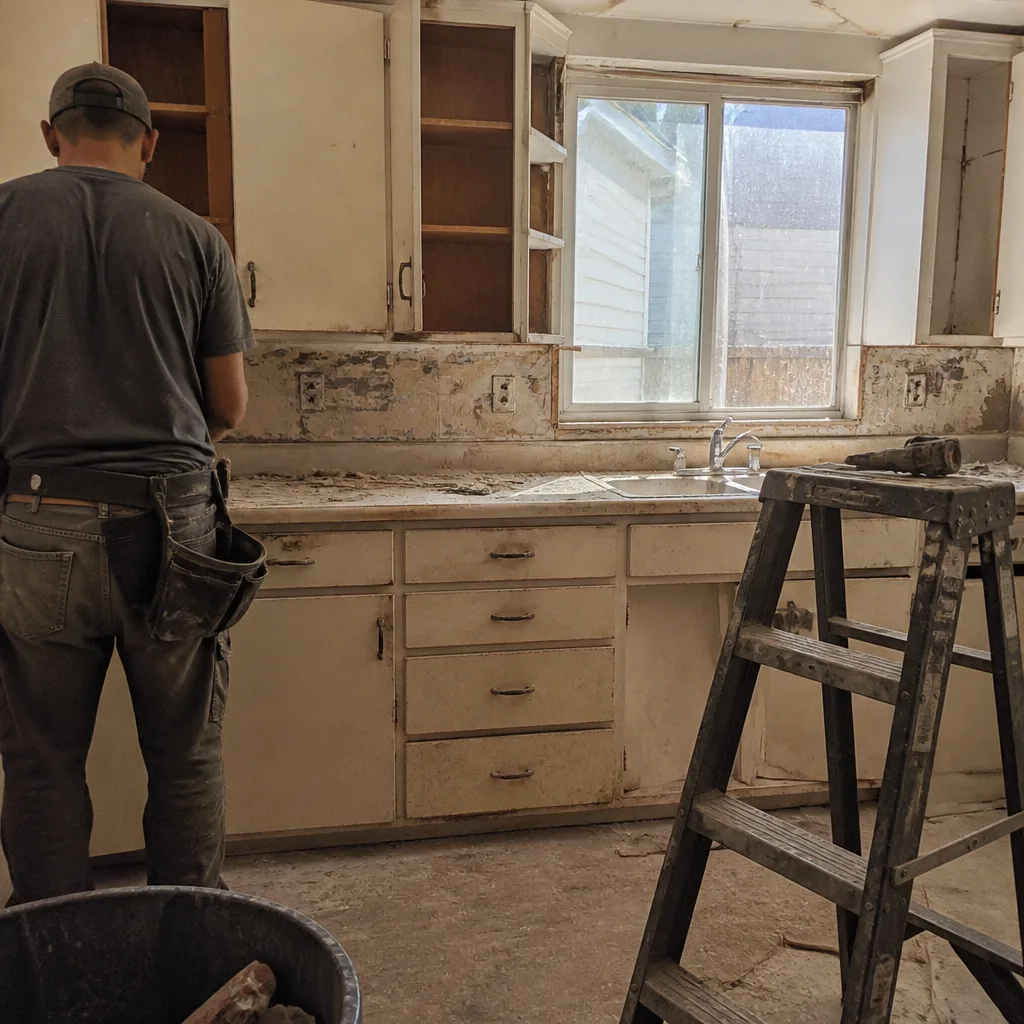
See the difference
 Before
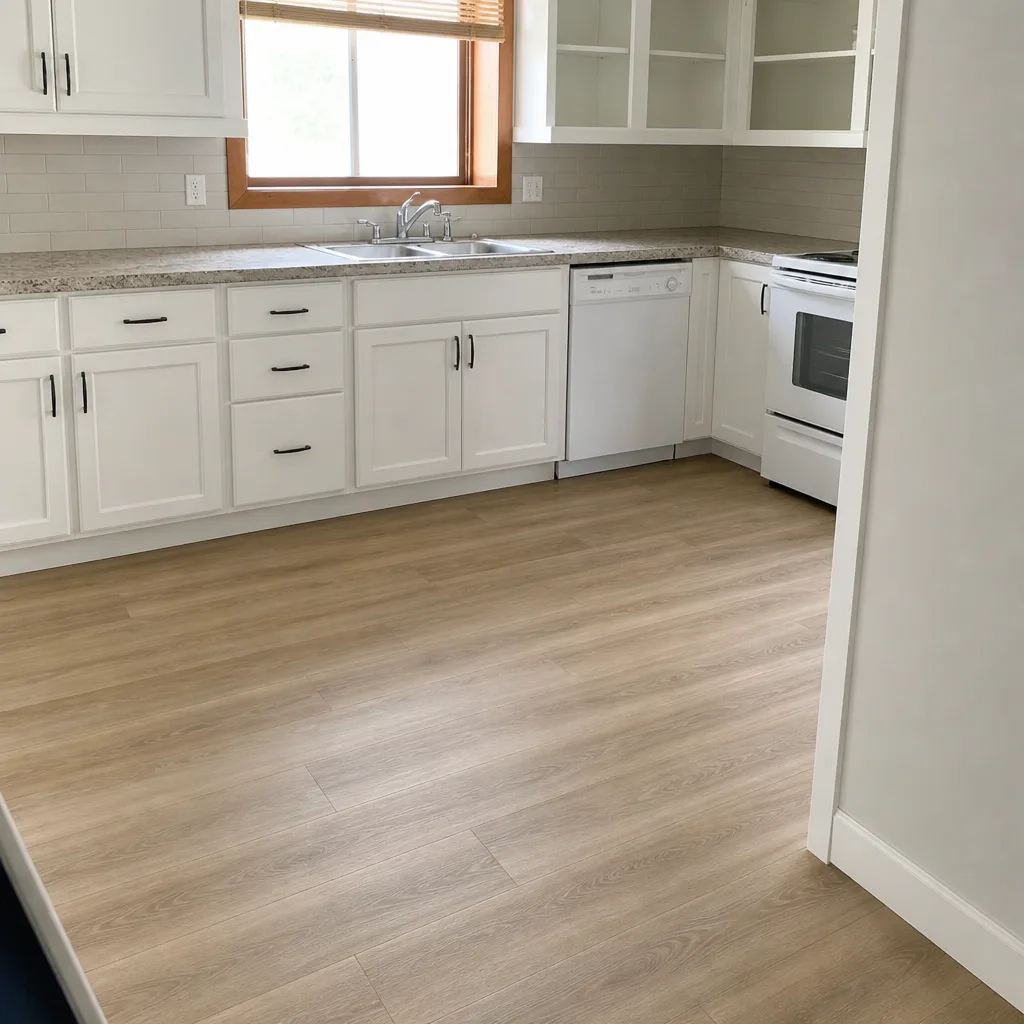 After
 Before
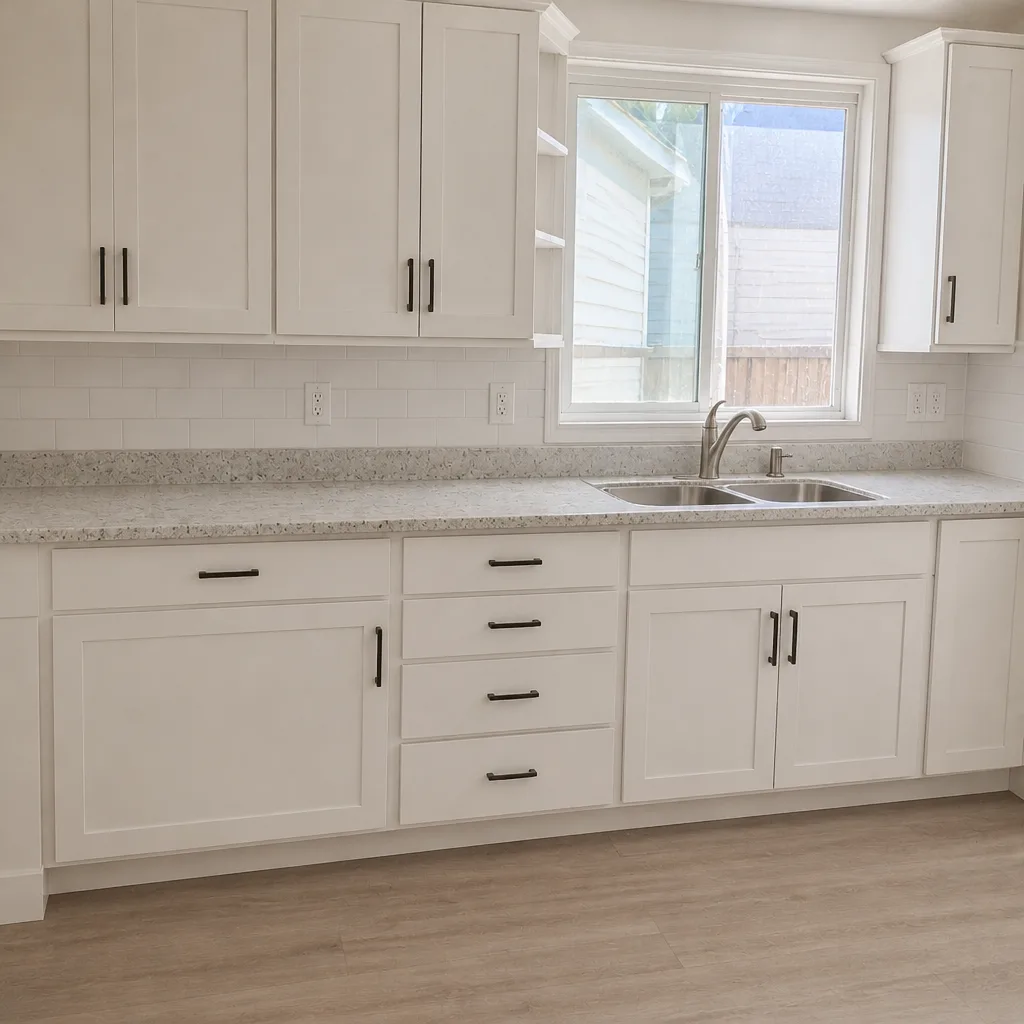 After
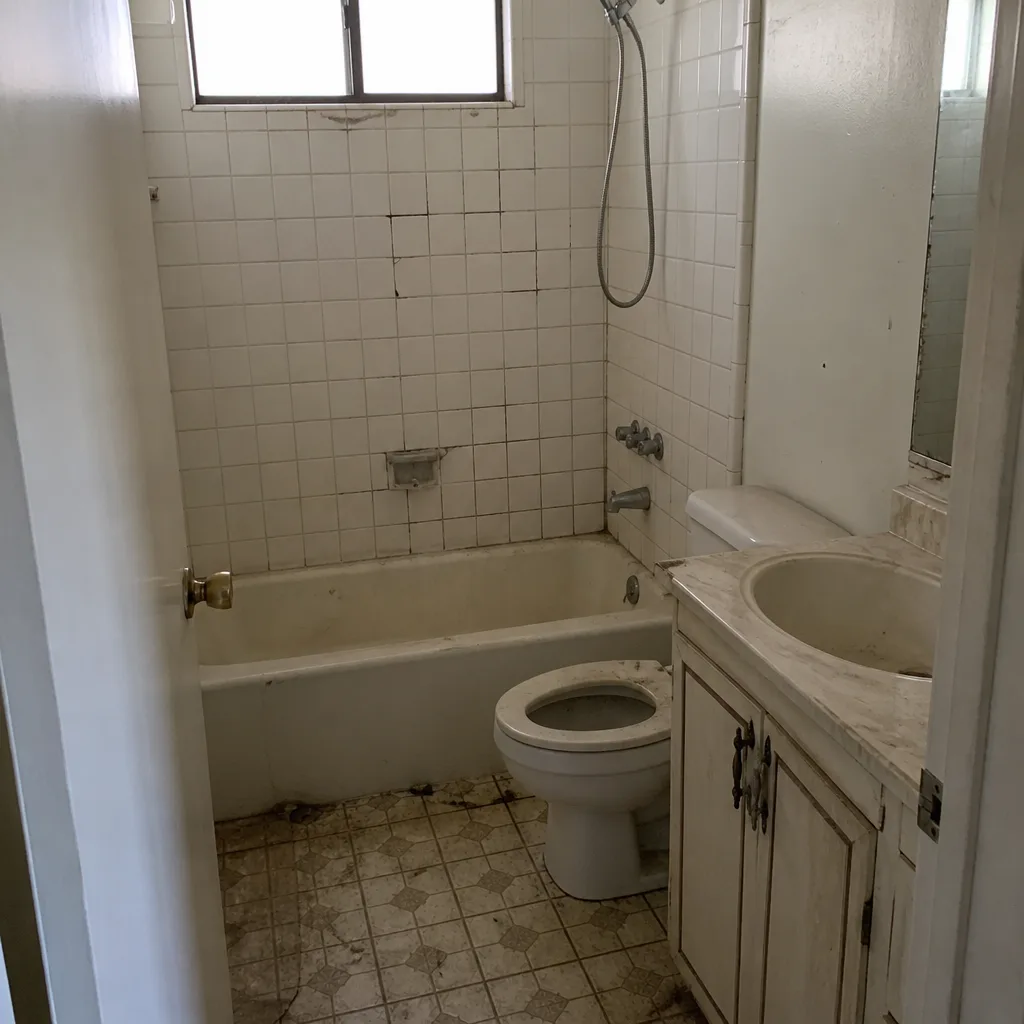 Before
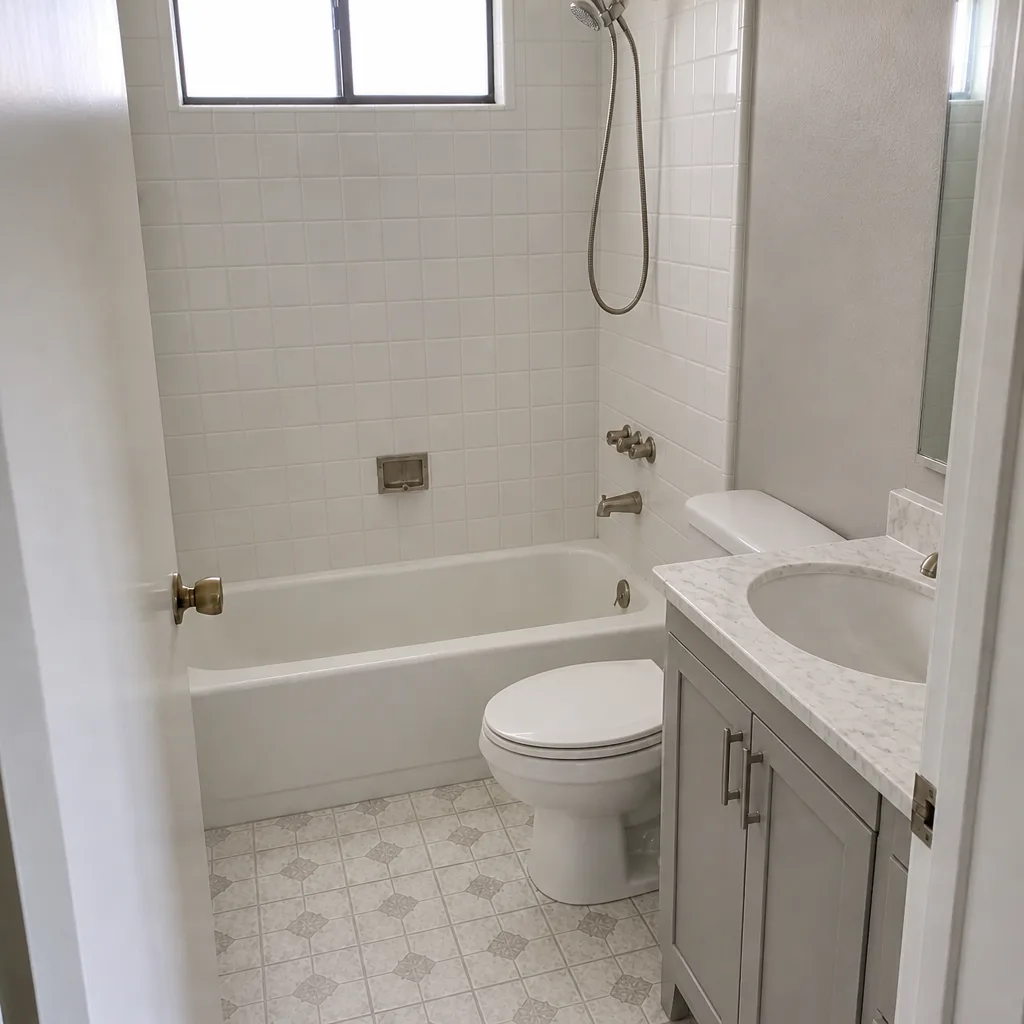 After
Frequently Asked Questions

Every two to three years at the joints around windows, doors, hose bibs, and light fixtures, and inspect every April regardless. Santa Clarita’s heat and dry air break caulk down faster than the national averages assume, so treat three years as the outside range, not the target.
Cosmetic patching of hairline cracks usually doesn’t require a permit. Repairs that involve removing and re-installing stucco around penetrations, windows, or that touch the structural envelope do, and the work must be done by a licensed contractor (a C-35 for plastering or a B general building for anything broader). Call (866) 383-6693 if you’re unsure which bucket your repair lands in; a quick look usually settles it, and estimates are free.
Anything over California’s $500 labor-and-materials threshold, plus any work touching stucco repair, roofing, electrical, gas, plumbing supply and drain lines, or structural framing. Caulking, gutter clearing, filter changes, and paint touch-up don’t require a license. When in doubt, ask for the license classification in writing before work starts.
Cracks under a sixteenth of an inch that don’t grow are usually cosmetic. Cracks that stair-step diagonally, reappear after repair, or show water or rust staining indicate movement or water behind the wall and need a contractor. In Santa Clarita, cracks that widen through the summer are the signal that the substrate is moving, not just the coating drying out.
A thorough walk-through of a typical Santa Clarita home takes about an hour. You’ll get a written, line-item assessment afterward with prices attached to each item and a note on which items can safely wait a season so you can prioritize. Written price before any work starts is the standard we operate under, not an upsell.
Yes, on both. Most builder warranties require documented upkeep, and most homeowners insurance policies deny water-damage claims if the underlying cause was long-term neglect. Dated photos, contractor receipts, and permit records are what protect you. A written assessment from a licensed contractor is the strongest single document to have in the file. Call (866) 383-6693 to schedule one; estimates are free.
The Bottom Line
Santa Clarita isn’t a bad place to own a home. It’s just a place that punishes a national-average maintenance schedule. Get the order right and the rest follows: April stucco and caulk inspection before the heat, July drainage check before the monsoon, October window and door seal audit before the Santa Anas, and one annual roof-and-attic walk-through that ties the whole thing together. Document everything, know which repairs are legally permitted DIY and which aren’t, and get written assessments instead of verbal ballparks so you’re not the one holding an empty promise when the caulk fails. The homes that stay dry, here, are the homes whose owners put small repair money in early and kept the paperwork.
Get a Written Maintenance Assessment

Give us a call and we’ll walk your Santa Clarita home, tell you what’s likely to fail next and when, and hand you a written price for anything you want to fix and a clear “monitor” list for anything you don’t. No pressure and no sales visit. Estimates are free, except the one that tells you what you actually need. Call (866) 383-6693 to schedule your free written estimate.
Written by the team at Penhallow Remodeling Santa Clarita.