Last updated November 18, 2026

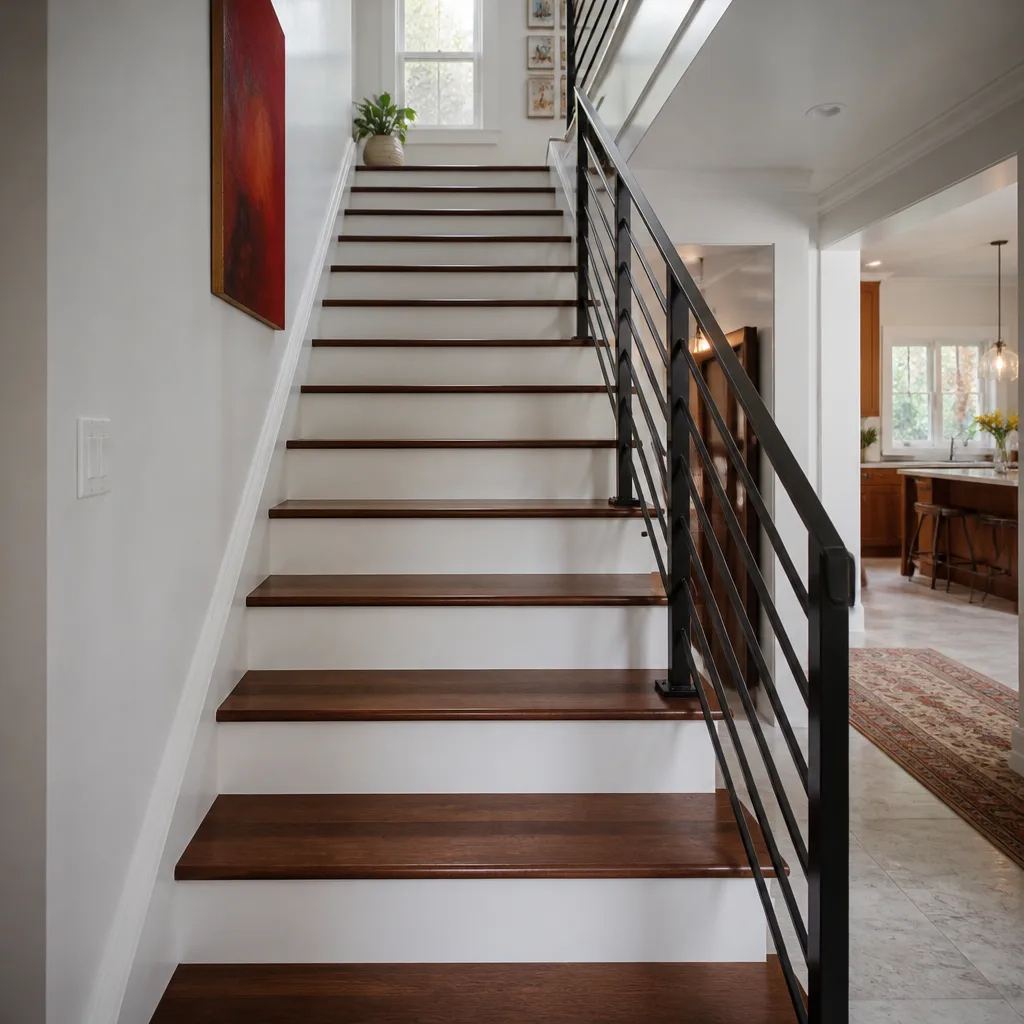
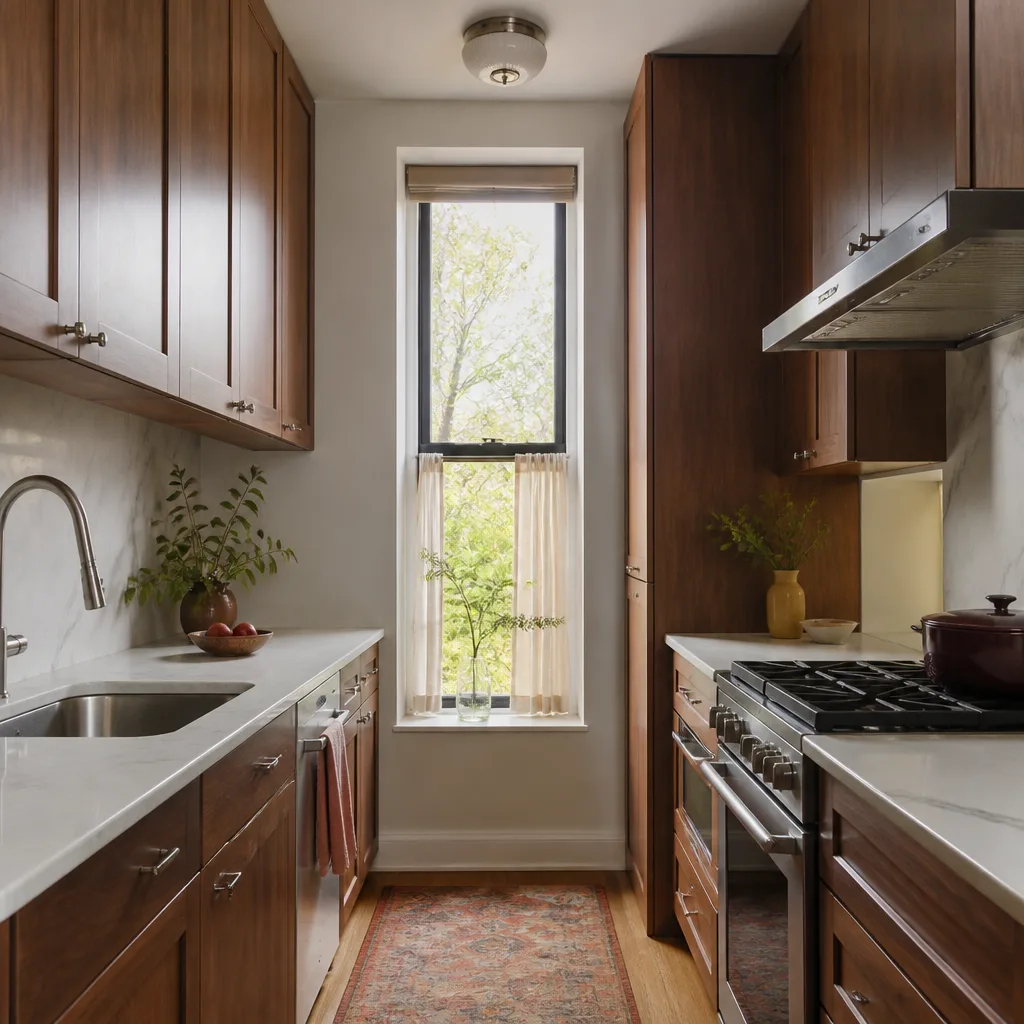
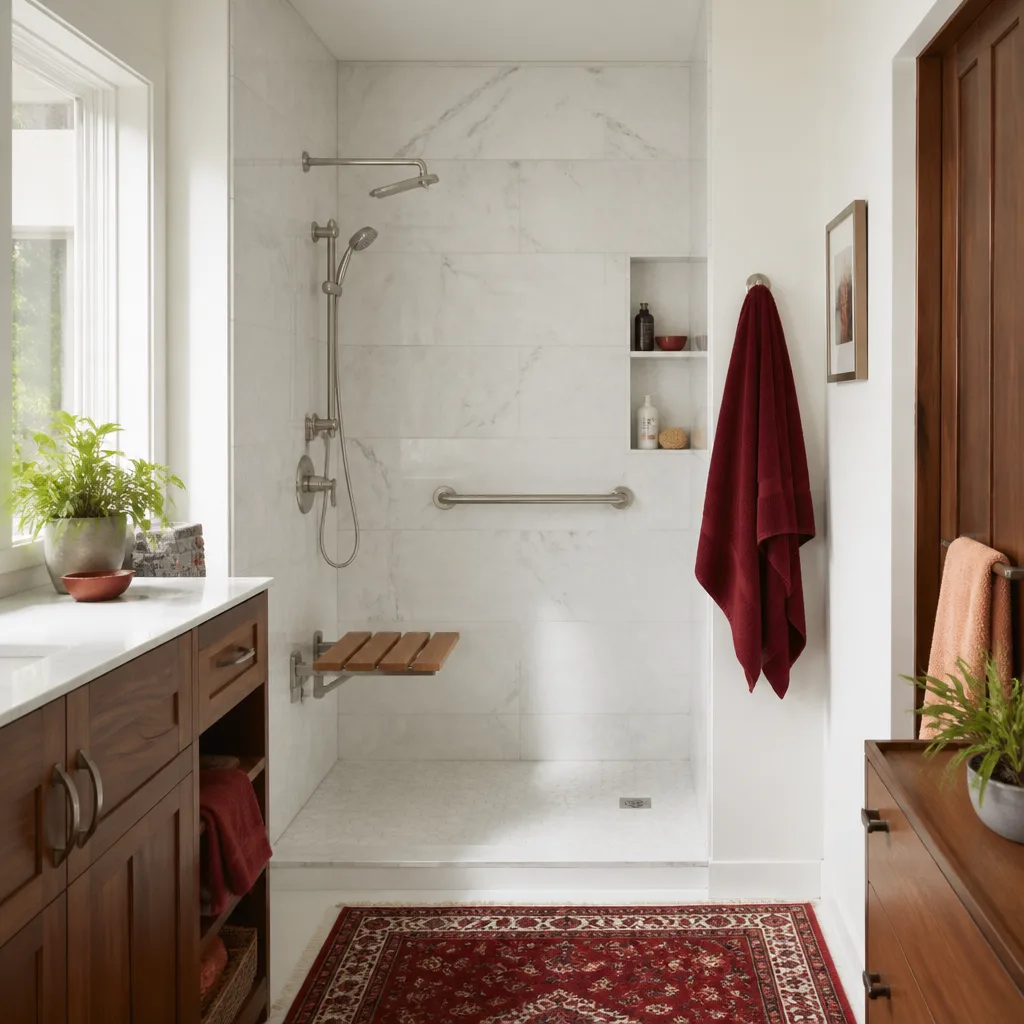
Free written scope consultation - allowances, timeline, and change-order rules on paper before a single trade is scheduled
General Contractor Warning Signs Every Homeowner Should Know
The most dangerous contractor pitch isn’t the one that sounds sketchy. It’s the one that sounds reassuring: “Don’t worry, we’ll work out the final number as we go.” That single sentence has cost Santa Clarita homeowners tens of thousands of dollars in disputes a written price would have prevented. The red flags that actually predict a bad remodel aren’t always the obvious ones. They’re the procedural signals hiding in the first conversation and the fine print of the contract – the ones that sound reasonable right up until demo day. This guide walks through them, so you can spot a problem before you sign anything.
Quick Answer
The biggest contractor warning signs are a contractor who won’t put a firm written price in writing before work starts, who bills time and materials with no cap, who can’t give you a written start date and arrival window, and whose contract waives your right to file a complaint with the Contractors State License Board. If any of those show up in the first conversation or the paperwork, slow down. A legitimate contractor in Santa Clarita will hand you a written number and a written guarantee before a single cabinet comes out.
Styles & brands we work with
- Kitchen remodeling
- Bathroom remodeling
- Home additions & ADU
- Roofing
- Windows & doors
- Driveway & pavers
- Fence
Table of Contents
- The Procedural Red Flags Most Homeowners Miss
- Contract Language That Quietly Protects the Contractor, Not You
- The Too-Low Bid: How to Tell Competitive From Incomplete
- Verifying a License Beyond the CSLB Lookup
- The Scheduling Red Flag Nobody Talks About
- What an Enforceable Written Guarantee Actually Contains
- When to Walk Away – and What to Do Instead
The Procedural Red Flags Most Homeowners Miss
Everyone knows to check for a license and ask for references. But the signals that predict a bad outcome are usually about process, not paperwork. A contractor who is casual about how the job runs will be casual about your project, too. Here’s what to listen for in the first ten minutes.
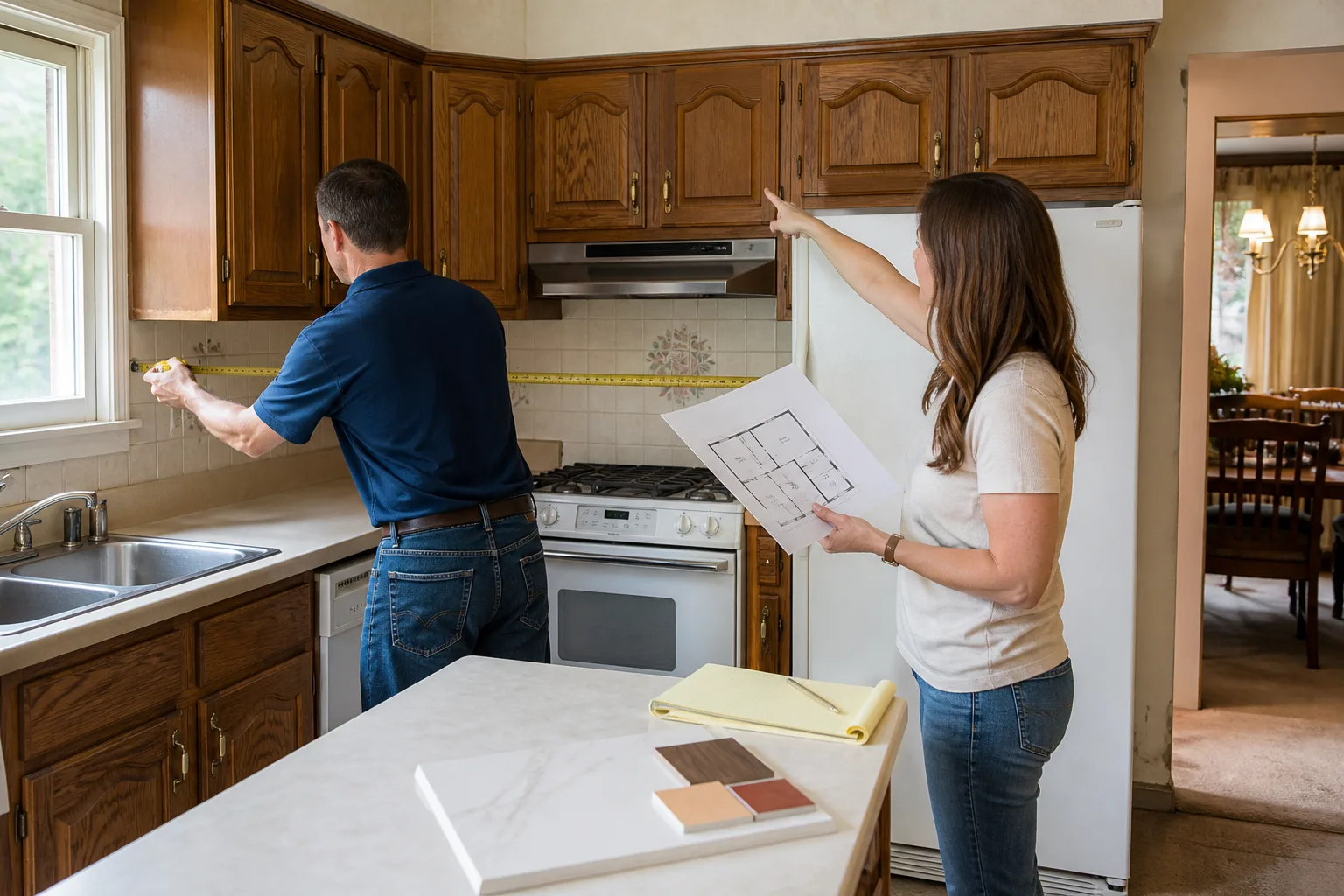
Watch for a contractor who resists a written price. “We’ll give you a ballpark and firm it up after demo” is not a pricing method – it’s a way to move the number once you’re committed and the kitchen is already torn apart. The Kingswell Way, the standard we operate under, is blunt about this: say the price before the work begins. If a contractor won’t, ask yourself why the number needs to stay flexible.
Other procedural signals worth flagging:
- No written arrival window. “Sometime Tuesday morning” is how a project slips three weeks without anyone noticing.
- Deposit pressure. California limits a down payment on most home improvement contracts to 10% of the contract price or $1,000, whichever is less. A contractor asking for 40% up front is asking you to fund their cash flow.
- No discussion of permits. In Santa Clarita, kitchen and bathroom remodels that move plumbing, electrical or walls require permits and inspections. A contractor who waves that off is either skipping the permit or planning to make you pull it.
- Uniform and crew questions get dodged. You deserve to know who is walking into your home. Background-checked, uniformed technicians are a standard operating practice, not a favor.
- The paperwork is thin. A real scope of work runs several pages. One page with a lump sum is a document built for disputes, not clarity.
None of these is proof of fraud on its own. Stacked together, they describe a contractor who manages projects by improvisation. In a Santa Clarita market where a full kitchen remodel routinely runs $18,000 to $55,000 depending on layout, cabinet line and countertop material, that improvisation gets expensive fast.
Contract Language That Quietly Protects the Contractor, Not You
The most expensive words in a remodel contract are the ones that sound neutral. Vague scope language, uncapped billing and arbitration clauses are the three that come up most often in disputes we hear about from Santa Clarita homeowners. Read every line as if the worst case already happened, because this is the document that decides what happens when it does.
Vague scope descriptions
“Install new cabinets and countertops” is not a scope of work. A real scope names the cabinet line (KraftMaid, Wellborn), the countertop material and fabricator (Cambria quartz or Silestone, for example), the fixtures by brand and model (Kohler and Moen are common), the substrate behind the tile, and what happens to the old materials. The trade word first, then the plain explanation: cement board substrate is the moisture-resistant layer behind your tile in a bathroom, and whether it’s specified in writing tells you if the price includes it.
Time and materials billing without a cap
Time and materials (T&M) means you pay for hours worked plus materials, often with a markup on both. T&M is legitimate for genuinely unpredictable work – a hidden plumbing problem inside a wall. It is not legitimate as the primary billing method for a kitchen remodel whose scope was clear from day one. If you’re offered T&M, demand a not-to-exceed cap in writing. Without a cap, the meter never stops.
Arbitration clauses that waive your complaint rights
This is the one homeowners miss hardest. Some contracts bury a clause requiring all disputes to go to private arbitration. That can limit your practical ability to file a complaint with the Contractors State License Board (CSLB), the state agency that licenses and disciplines contractors. A clause like that is not standard, and you’re allowed to strike it before signing. If a contractor won’t remove it, that tells you something about how they expect the job to go.
What a fair contract looks like, in short:
- A written, line-item price with a firm total – not a range, not a ballpark.
- A scope detailed enough to name materials, brands and what’s excluded.
- A written start date and daily arrival window.
- A payment schedule tied to milestones, with the legal deposit cap respected.
- A written guarantee of the work, spelled out on its own page.
If you’re planning a remodel and want to see how a written scope looks in practice, our Kitchen Remodeling in Santa Clarita page breaks down what a full project includes from the first walkthrough.
The Too-Low Bid: How to Tell Competitive From Incomplete
The lowest bid is rarely the cheapest job. It’s usually the one with the most missing. When a quote comes in dramatically under the others – 20% or more below the next-lowest – the gap is almost never efficiency. It’s a line item that will reappear later as a change order, at a price you didn’t agree to because you were already in the middle of the project.
Here’s how to check whether a bid is genuinely competitive or quietly incomplete:
- Does it include the permit fees? Santa Clarita permit costs for a kitchen or bath remodel vary with the scope, but they’re real, and a bid that excludes them is not lower – it’s just incomplete.
- Does it price disposal? Hauling away old cabinets, tile, appliances and demo debris is a real cost. If it’s not a line item, expect it to appear later.
- Is labor fully priced? Some bids leave out specialty labor – tile setting, electrical, plumbing rough-in – and add it once the work starts.
- Are the materials the same materials? Two bids for “quartz countertops” can differ by thousands if one quotes Cambria and the other quotes an unnamed slab. Same for cabinets and fixtures.
- Is the scope identical? Compare bids line by line, not by total. A bid that’s lower because it excludes the flooring isn’t a better deal – it’s a smaller project.
A genuinely competitive bid names its brands, prices its permits and disposal, and holds a firm total. Our General Contractor in Santa Clarita page walks through what a complete written estimate covers, so you have a checklist to compare bids against.
Verifying a License Beyond the CSLB Lookup
Looking up a contractor on the CSLB website is the first step, not the last. The license check tells you the license is active and in the right classification. It doesn’t tell you whether the contractor’s insurance is current, or who picks up the tab if a worker gets hurt on your property. Those are the questions that land on the homeowner when a policy has lapsed.
Ask for the certificate of insurance and read it. Workers’ compensation coverage is what pays if a crew member is injured on your job. If a contractor’s policy lapsed – and policies lapse more often than you’d think – the injury can come back to you as the property owner. General liability insurance covers damage to your home. Both should be current, and both should name coverage limits you can actually read.
The verification steps that matter:
- CSLB license lookup: confirm the license is active, the classification matches the work, and there’s no discipline history tied to the license.
- Workers’ comp certificate: ask for it in writing and confirm the policy dates cover your project timeline.
- General liability certificate: same drill. If it’s not in writing, it doesn’t count.
- Bond confirmation: California contractors are required to carry a contractor’s bond. If that’s not in place, ask why.
- Who’s actually on the crew? A licensed contractor can use subcontractors, but you deserve to know who’s coming and that they’re background-checked and arrive in uniform.
None of this is unusual to ask. A contractor with current paperwork will send it over without hesitation, because they keep it ready. The ones who get defensive about insurance certificates are telling you something.
The Scheduling Red Flag Nobody Talks About
Ask a contractor for a written start date and a daily arrival window. If they can’t give you one, pay attention – how they schedule your project is how they’ll manage your project. A crew that shows up “sometime in the next couple weeks” and drifts in at random hours is a crew whose timeline will drift with it. The project that was supposed to take six weeks turns into four months, and nobody can explain where the time went because nobody wrote down where it was supposed to go.
A written arrival window does two things. It holds the contractor to a schedule, and it tells you whether the contractor runs a schedule at all. In our experience across Santa Clarita, the projects that stay on track are the ones where the start date and the daily window are agreed before the first material arrives. That’s part of The Kingswell Way: show up in the window we gave you. If a contractor won’t commit to a window, you already know what the rest of the project looks like.
Scheduling questions worth asking up front:
- What’s the written start date, and who’s responsible for the permit timeline?
- What’s the daily arrival window, and how are delays communicated?
- When are inspections scheduled, and who coordinates them?
- Is there a defined point where the project is “done” – punch list included?
The answers tell you whether you’re hiring a project manager or a hope-based enterprise. For a sense of what a scheduled, written-scope remodel looks like end to end, our Bathroom Remodeling in Santa Clarita page shows how the pieces fit together.
What an Enforceable Written Guarantee Actually Contains
“We stand behind our work” is a sentence, not a guarantee. A real written guarantee names what’s covered, how long it lasts, who pays for the fix, and what happens if the repair fails. Verbal assurances sound warm in the driveway and disappear the moment you need one. Here are the five elements that make a guarantee enforceable in California:
- It’s in writing and signed. A guarantee on the contract, not in the salesperson’s memory.
- It defines the coverage period. Ours is the 365-Day Done Right Promise – if the work fails inside that year, we come back and fix it at no charge.
- It names what’s covered. Workmanship, materials, or both. Vague coverage is the same as no coverage.
- It names the remedy. Repair at no charge, a free return visit if the repair fails, no service call fee. The remedy is the guarantee.
- It states the timeline for a response. A guarantee without a response commitment is a phone number you hope answers.
When a contractor installs branded materials – Cambria quartz, Kohler fixtures, James Hardie siding – those products carry their own manufacturer warranties. A real guarantee layers on top of that, so you’re covered twice. And a written guarantee means the answer to “what happens if this cracks again?” is already on paper.
If you’re unsure whether a quote’s guarantee is worth anything, bring it to us. We’re happy to walk through what’s enforceable and what isn’t, even if you don’t hire us. Start at our Penhallow Remodeling Santa Clarita home page for the full picture of how we work.
When to Walk Away – and What to Do Instead
Some warning signs are worth asking about, and some are worth walking away from. The line is usually whether the contractor is willing to put things in writing. A missing line item is a conversation. A refusal to guarantee the price or the work is a decision point. Here’s how we’d sort them.
Ask about:
- An unclear line on the estimate (missing disposal, permits, or a material brand).
- A T&M line item without a cap – ask for the cap.
- A vague scheduling commitment – ask for it in writing.
Walk away from:
- A contractor who won’t give a written price before work starts.
- A contract that waives your CSLB complaint rights and won’t strike the clause.
- A deposit request above the California legal limit.
- No current insurance certificate in writing.
- No written guarantee at all.
Calling around after you’ve walked away isn’t a setback – it’s the cheapest mistake you’ll ever make. The (866) 383-6693 line is answered live 24/7, so a second opinion is a phone call away, not a callback window away.
Common Mistakes to Avoid
- Accepting a verbal price. In Santa Clarita, a verbal number and an invoice number rarely match. Get the written price before any work starts, every time.
- Choosing the lowest bid without comparing scope. A bid that’s 20% lower usually excludes 20% of the job. Compare line by line, not on total.
- Skipping the CSLB check and the insurance certificate. The license lookup confirms the license; the certificate confirms the coverage. One without the other is half a check.
- Signing a contract you didn’t read. Vague scope language, uncapped T&M, and arbitration clauses live in the fine print, and not one of them sounds scary until it’s too late.
- Letting a contractor start without a written guarantee. “We stand behind our work” doesn’t survive the truck pulling out of the driveway. The written 365-Day Done Right Promise does.
- Ignoring the schedule question. A contractor who can’t give a written arrival window can’t manage a timeline. Santa Clarita remodels run into the seasons – exterior work in the Santa Ana wind months, interior work during summer heat – and a real schedule accounts for both.
- Paying too much up front. California caps home improvement deposits at 10% or $1,000, whichever is less. A contractor who wants more up front is asking you to finance the job.
See the difference
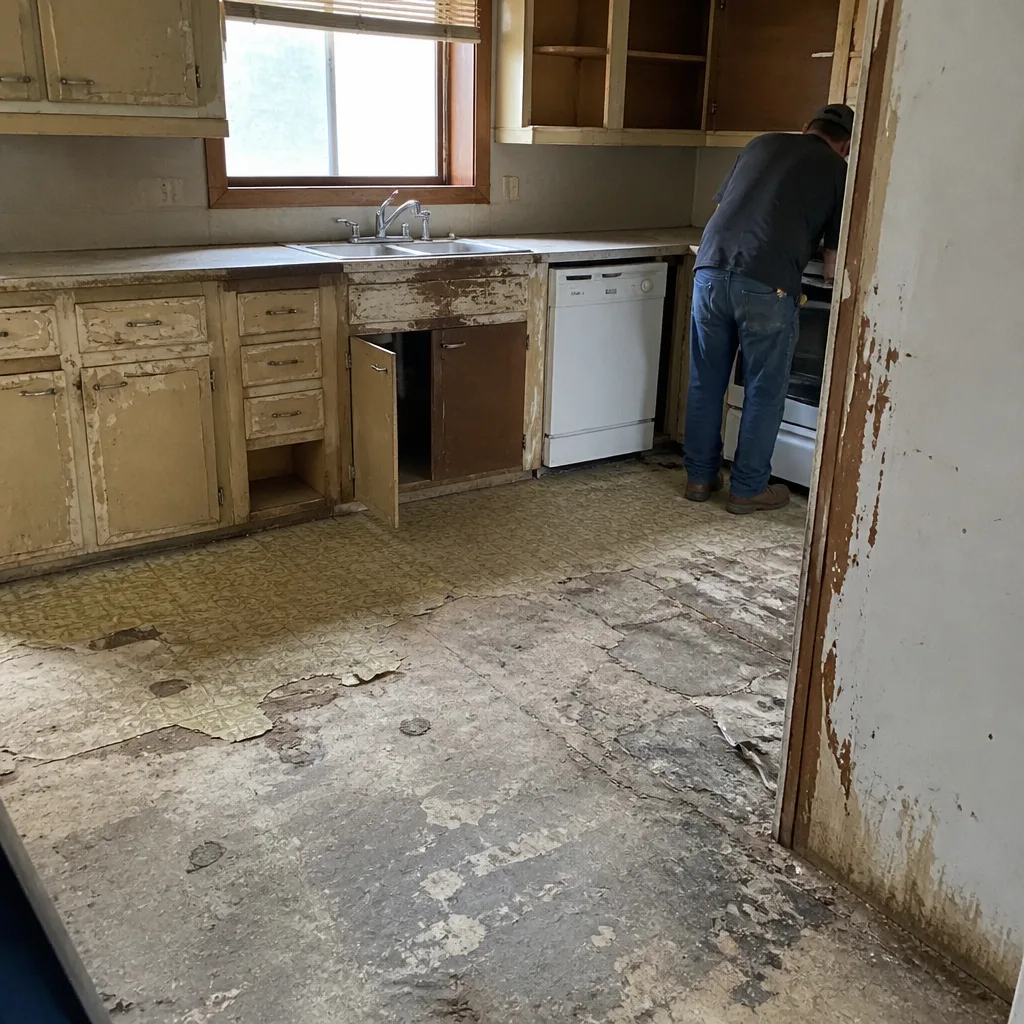 Before
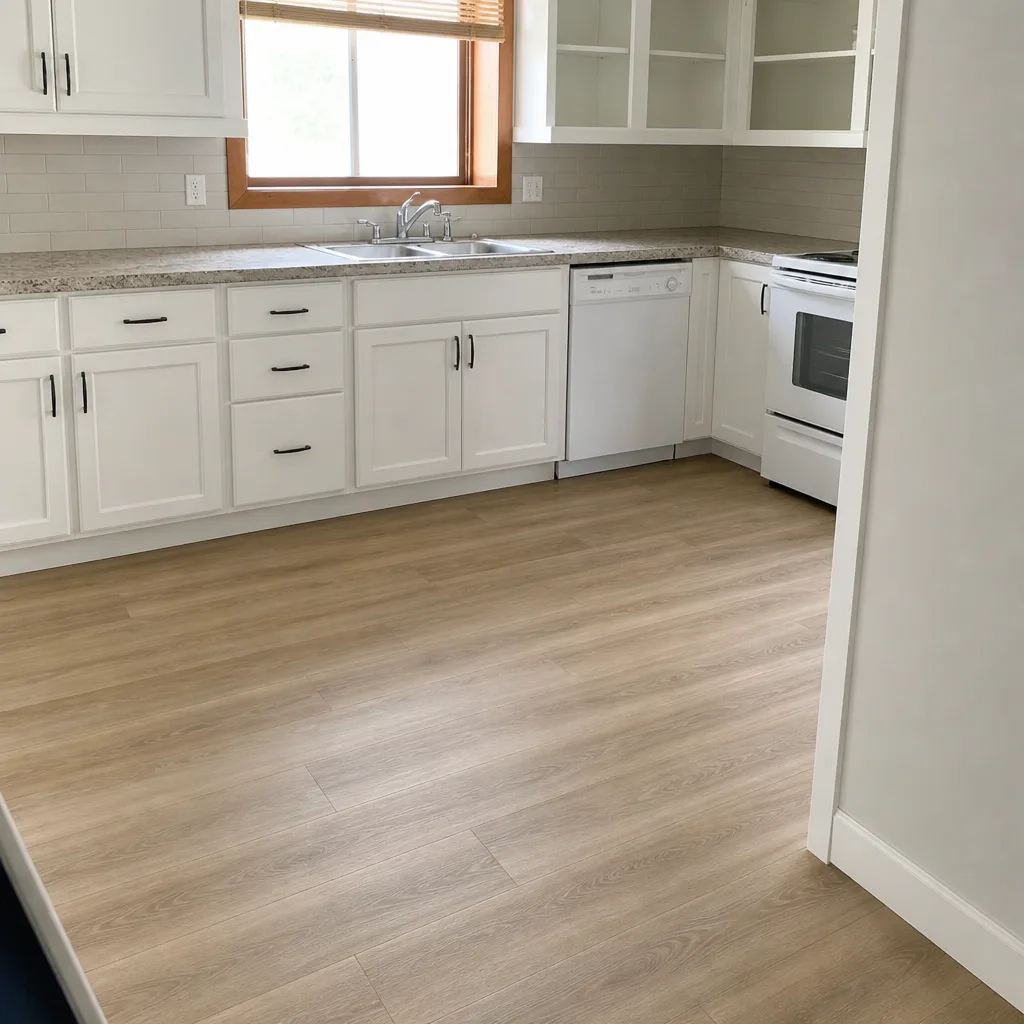 After
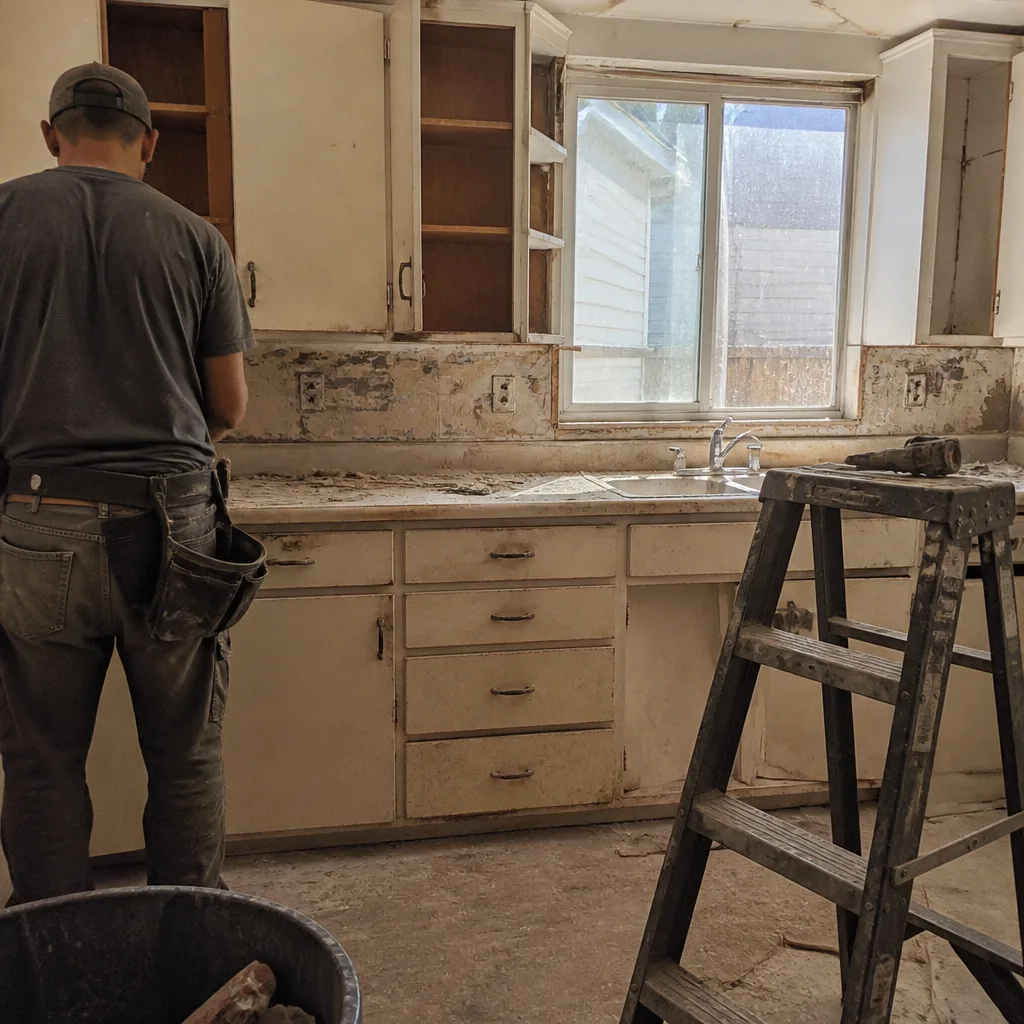 Before
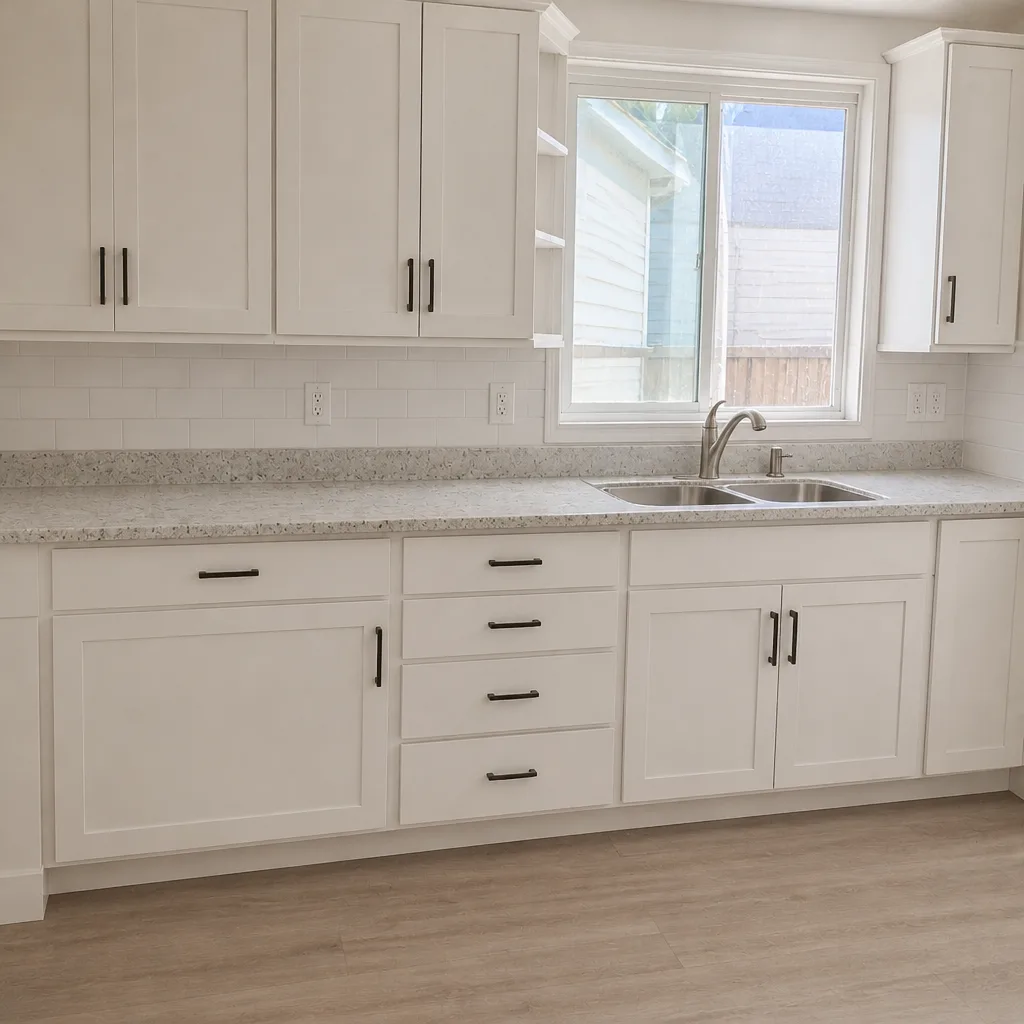 After
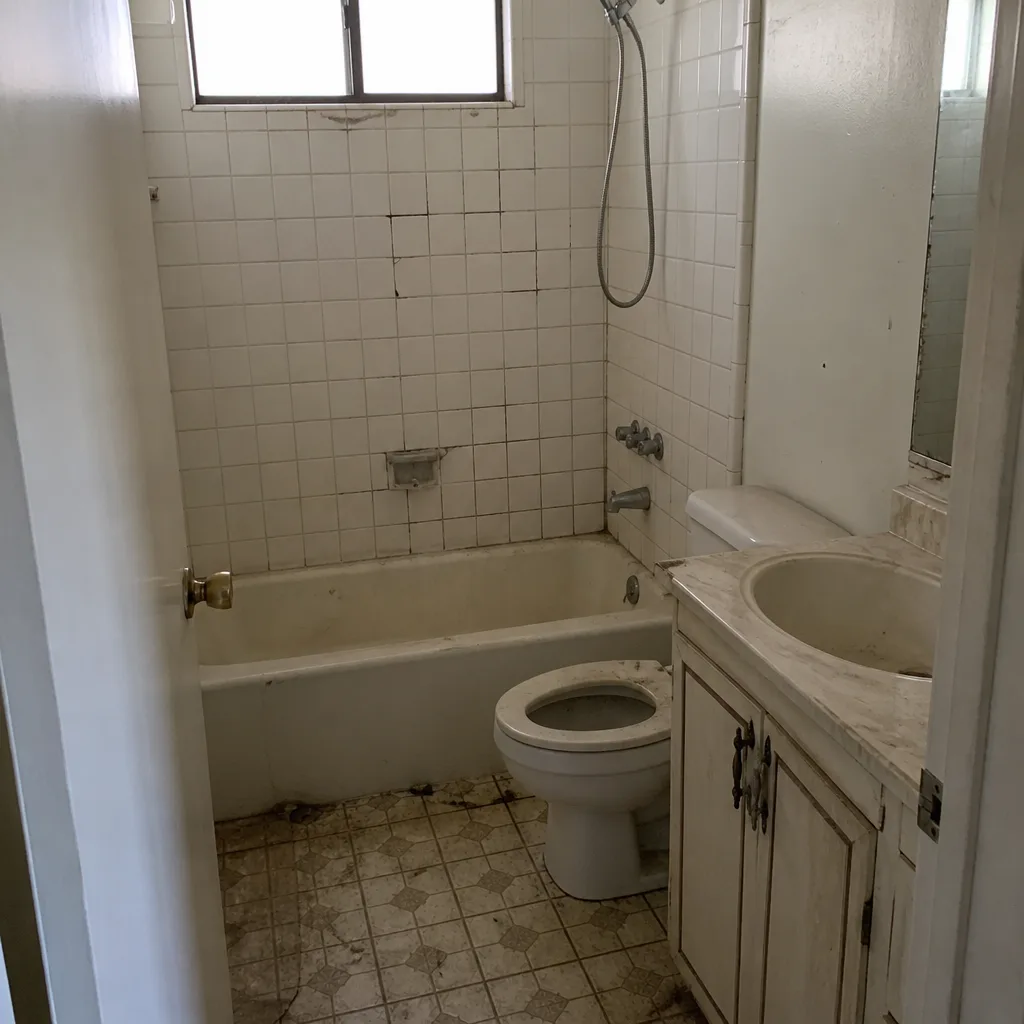 Before
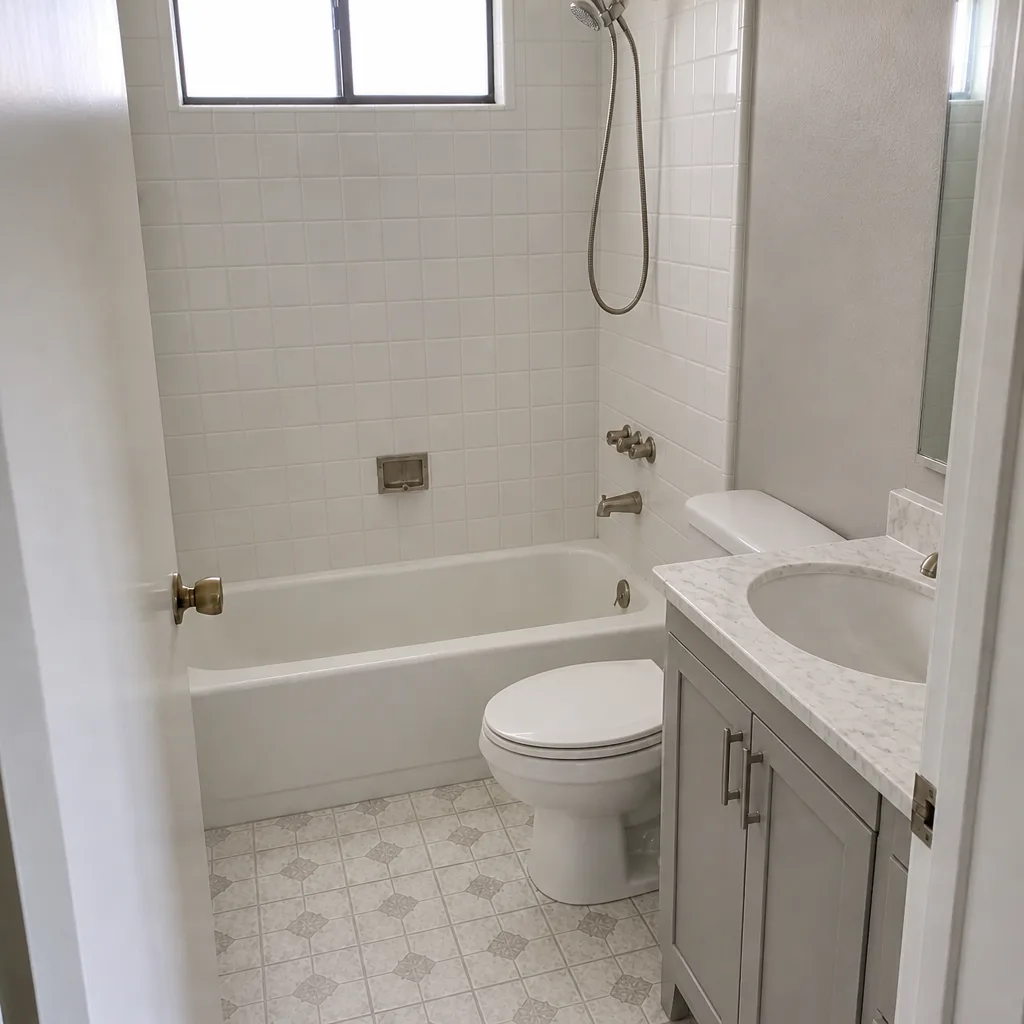 After
When to Call a Professional
Call a licensed general contractor when a project involves moving walls, plumbing, electrical work or permits – and that’s true in Santa Clarita just as it is anywhere. Kitchen remodel that reconfigures the layout? Permits and inspections. Bathroom that relocates a drain? Same. Any job where the scope goes past cosmetic surfaces is a job for a professional with a license and insurance. You can read more about the range of work on our Bathroom Remodeling in Santa Clarita page. Penhallow Remodeling Santa Clarita offers free estimates in Santa Clarita – call (866) 383-6693 and we’ll put a written number in your hands before anything starts.
Frequently Asked Questions

A contractor who won’t give you a firm written price before work starts. Verbal estimates are where the disputes begin – the number that “changes at the door” is a number that was never committed to in writing. A written price, a written scope and a written guarantee before any tool comes out is the baseline, and any contractor in Santa Clarita should meet it. Call (866) 383-6693 for an exact quote – estimates are free.
Kitchen remodels in Santa Clarita typically run $18,000 to $55,000 depending on layout, cabinet line and countertop material. The variables that move the number most are cabinet brand (KraftMaid and Wellborn, for example), whether the layout changes, and countertop material such as Cambria quartz or Silestone. A written line-item estimate should break out each of those so you know what the number is made of. Call (866) 383-6693 to schedule your free estimate.
It shouldn’t – if the price is written before work starts and the scope is specific. The change-order trap happens when the contract leaves items like disposal, permits or a material brand unpriced, or when billing is time and materials with no cap. Ask for a firm written total and a not-to-exceed cap on any T&M line. The number on day one should be the number on the invoice. Call (866) 383-6693 to get a written, fixed price up front.
We pull the permits and coordinate the inspections on our projects. In Santa Clarita, remodels that move plumbing, electrical or walls require permits, and pulling them is part of the job – not an extra. If a contractor asks you to pull the permit yourself, ask why. Call (866) 383-6693 for a free estimate that includes permits and inspections in the written scope.
A written guarantee should name the coverage period, what’s covered (workmanship and materials), the remedy, and the response timeline. Ours is the 365-Day Done Right Promise: if the work fails inside the guarantee period, we come back and fix it at no charge, and a failed repair gets a free return visit with no service call fee. It’s included in writing on every project. Call (866) 383-6693 to see the guarantee before you commit.
A typical kitchen remodel runs several weeks to a couple of months, and a bathroom is usually shorter, depending on the scope and permit timeline. The honest answer depends on whether the layout changes and how long inspections take. What you should be able to count on is a written start date and a daily arrival window. If a contractor can’t give you either, that’s your warning sign. Call (866) 383-6693 for a written schedule with your free estimate.
The Bottom Line
The warning signs that actually predict a bad remodel are rarely the obvious ones. They’re the reassuring sentence that turns into a flexible price, the contract clause that protects the contractor, the bid that’s missing the permits, and the schedule that lives in someone’s head. Your defense is simple: a written price before work begins, a written scope that names its materials, current insurance in writing, a written start date and arrival window, and a written guarantee with a real remedy. Santa Clarita homeowners who hold contractors to those five standards get remodels that finish where they started. Those who don’t get the flexible-number project. Call (866) 383-6693 for a free estimate and see the difference a written number makes before the first cabinet comes out.
Written by the team at Penhallow Remodeling Santa Clarita.