Last updated November 18, 2026

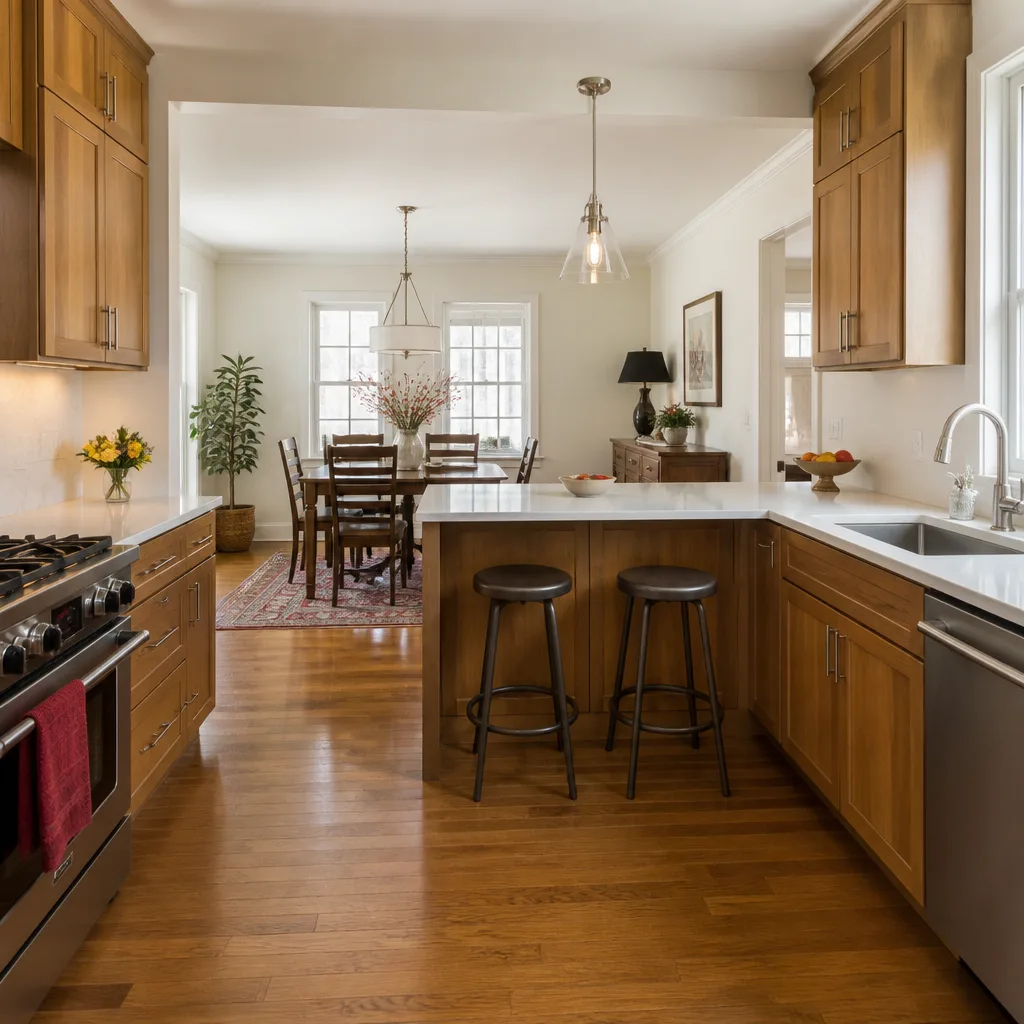
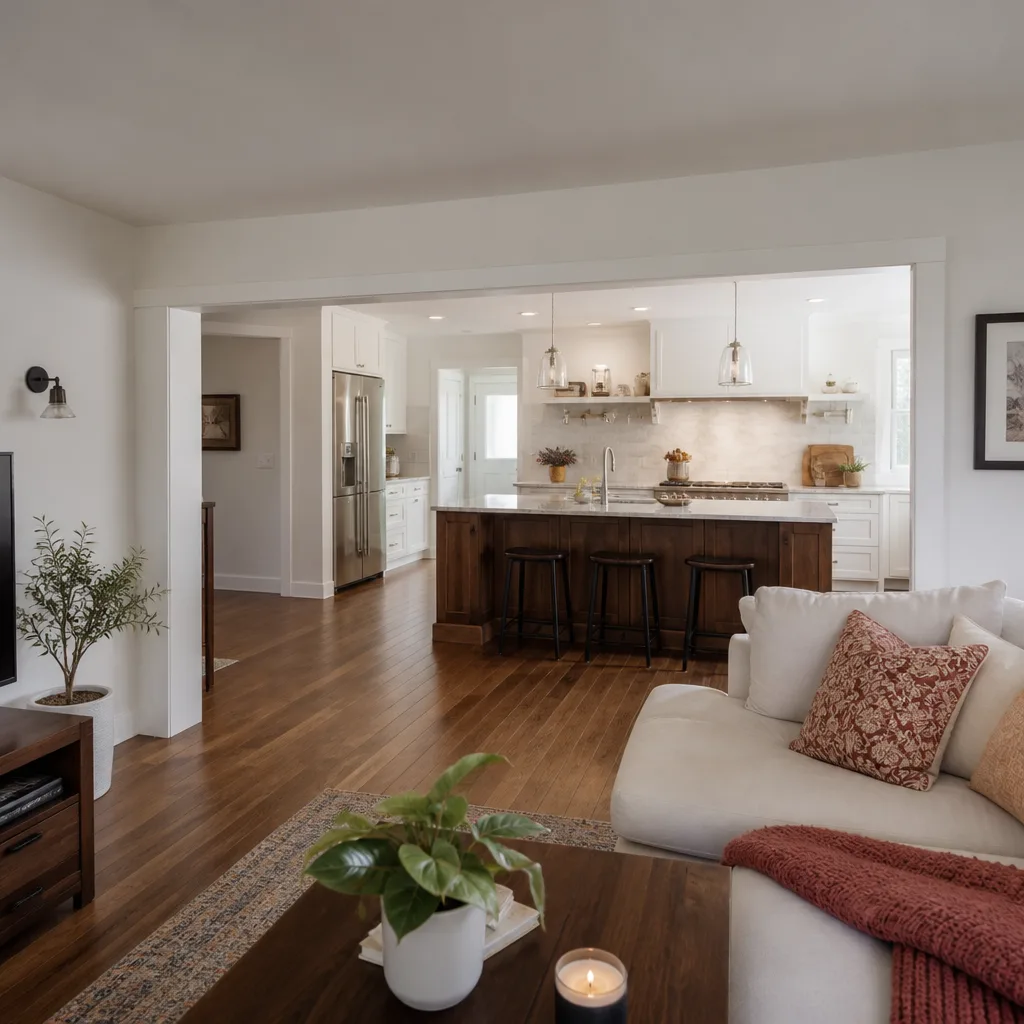
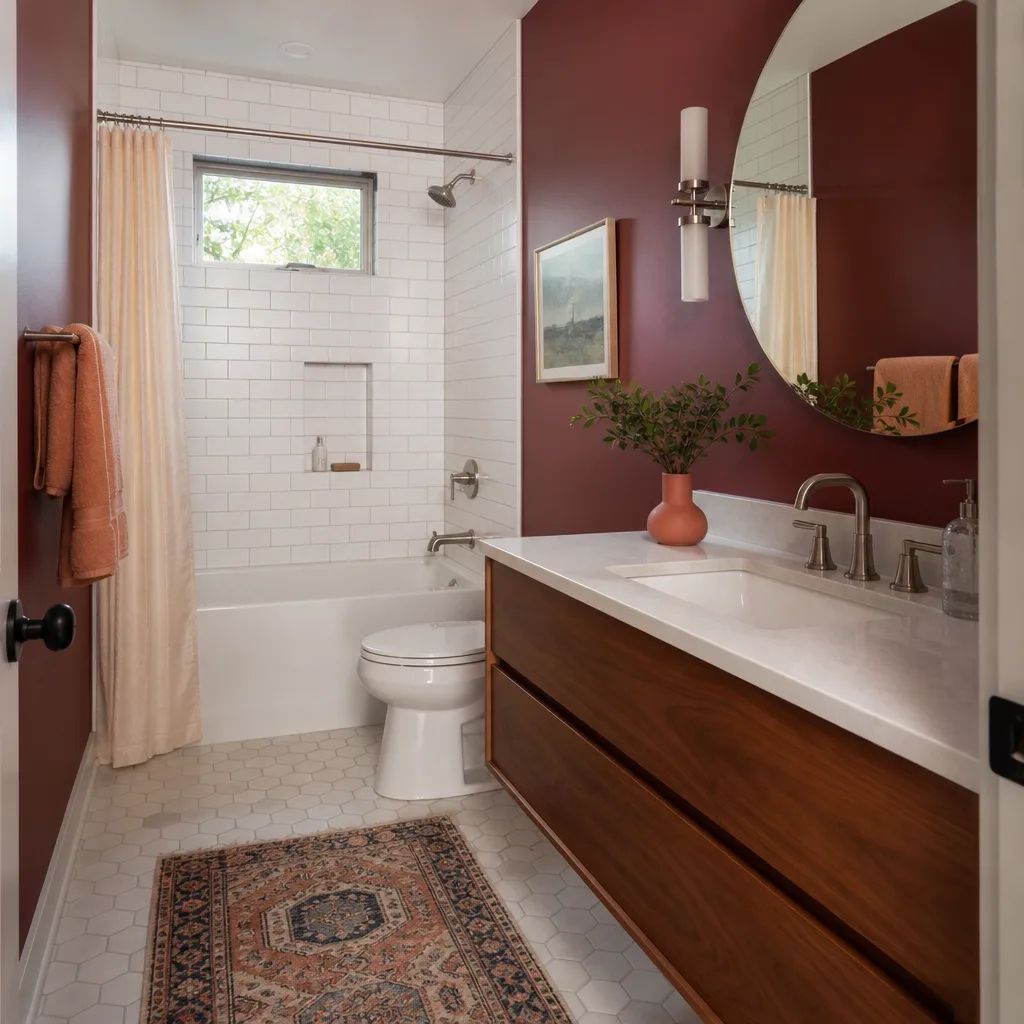

Free written scope consultation - allowances, timeline, and change-order rules on paper before a single trade is scheduled
DIY vs Professional Kitchen Remodeling: What’s Safe to Do Yourself
Painting your own cabinets is a legitimate DIY project. Moving the sink 18 inches is not – not because it’s technically impossible, but because a permit is required, the work must be inspected, and a failure means a wet subfloor under your brand-new flooring six months later. Most homeowners assume this line falls somewhere around “how hard is it,” so they take on wiring and cabinet moving with the same confidence they bring to a roller and a can of paint. The line actually falls at consequence, not difficulty. In this guide we’ll sort kitchen tasks by what happens when they go wrong, walk through the real permit trap in Santa Clarita, and put honest labor hours and dollar figures next to the DIY savings so you can judge whether they’re worth your weekends.
Quick Answer
The kitchen work that’s genuinely safe to do yourself is cosmetic: painting cabinets, swapping hardware, installing open shelving, replacing a faucet on existing plumbing, and laying a tile backsplash over sound substrate. The work that should go to a licensed professional is anything involving electrical circuits, gas lines, plumbing relocation, structural changes, or permit-required work – because a failure in those areas doesn’t just look bad, it fails inspection, voids warranties, or causes water damage months later. If you’re unsure which side of that line your project sits on, it sits on the professional side.
Styles & brands we work with
- Kitchen remodeling
- Bathroom remodeling
- Home additions & ADU
- Roofing
- Windows & doors
- Driveway & pavers
- Fence
Table of Contents
- Sorting Kitchen Tasks by Consequence, Not Difficulty
- The Permit Trap: Why Unpermitted Work Costs More Than the Permit
- What DIY Actually Saves You, Task by Task
- Doing Your Own Demo: What It Really Entails
- How to Structure a Hybrid Project With a Contractor
- What Fails Inspection and What Voids a Warranty
- Santa Clarita-Specific Factors That Change the Math
- Common Mistakes to Avoid
Sorting Kitchen Tasks by Consequence, Not Difficulty
The usual sorting question is “how hard is this,” and it’s the wrong question. Hanging open shelving is easy and can look fantastic; if you hit a water line you’ll wish you hadn’t. Running a new 20-amp circuit for a countertop appliance is fiddly, but the consequence of getting it right is a code-compliant kitchen. Sort by what breaks when the work is done wrong, and the picture gets clearer.
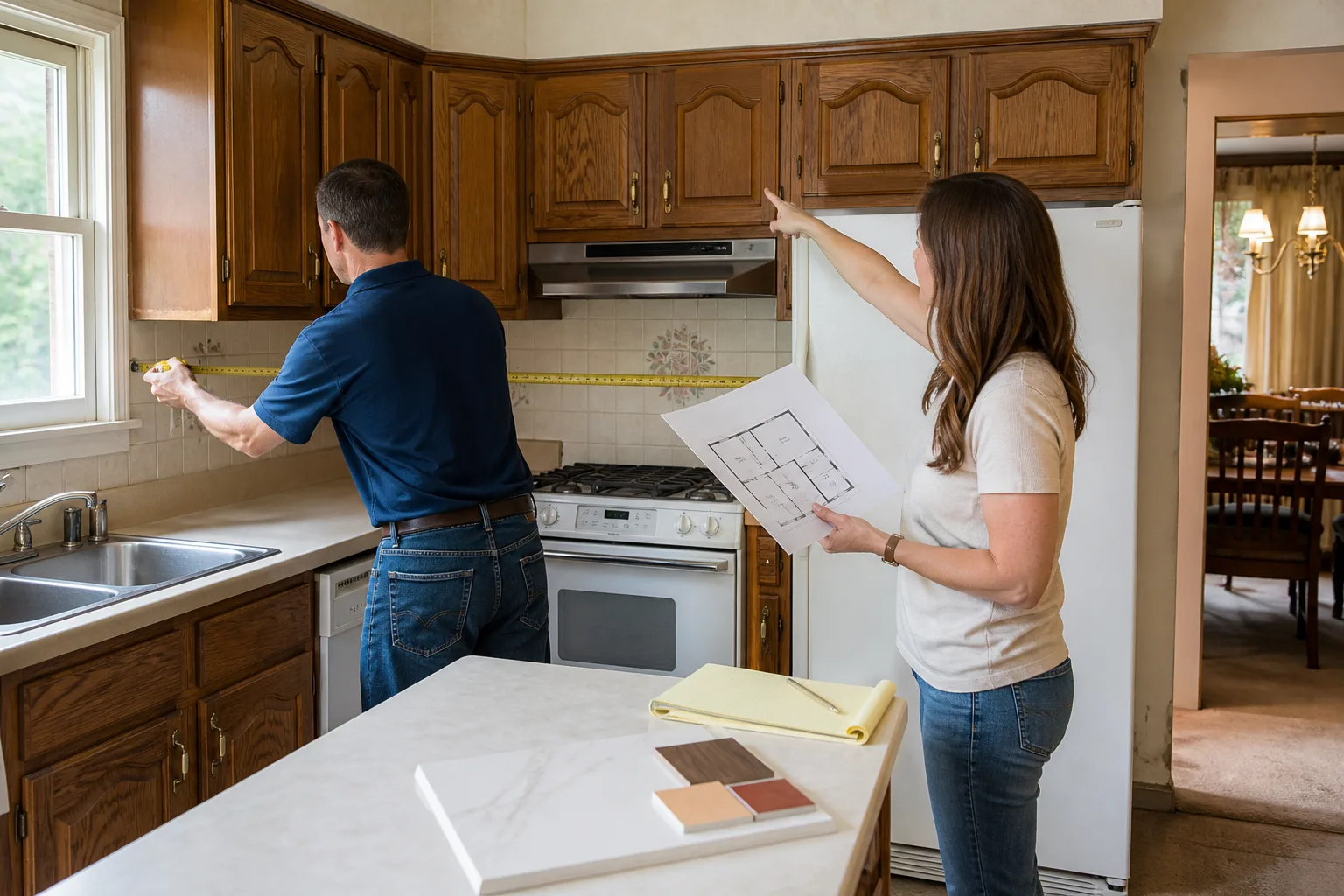
Here’s the split we use when a homeowner asks us whether they should do a piece of their own remodel. This isn’t about talent. It’s about who carries the liability if the work later fails an electrical inspection, pulls a permit condition, or floods a cabinet base.
Cosmetic work: safe to DIY
- Painting cabinet doors and boxes (prep and drying time drive the result, not skill)
- Swapping cabinet knobs, pulls and handles
- Installing open shelving on drywall with proper anchors
- Replacing a faucet on existing water shutoffs and drain lines
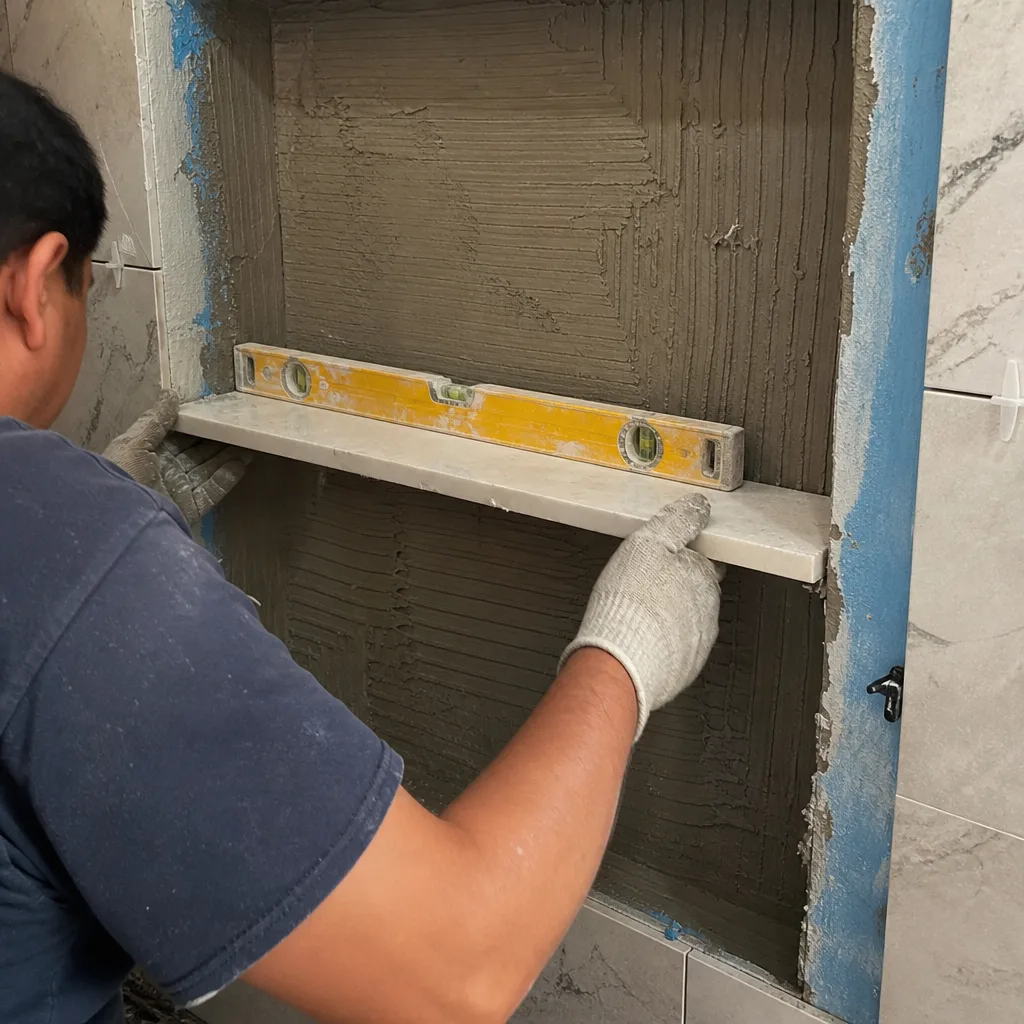
- Tiling a backsplash over sound, dry substrate
- Replacing a light fixture on an existing switched circuit
- Filling and sanding nail holes, caulking the sink perimeter, touching up trim
Consequence work: hire a licensed professional
- Adding or moving an electrical circuit, outlet or dedicated appliance line
- Any gas line change (range, cooktop, oven) – licensed and permitted only
- Relocating a sink, dishwasher or ice maker water line
- Moving or removing a wall (that’s often structural)
- Cabinet re-hanging where a load-bearing installation is required
- Anything the local building department requires a permit for
The electrical and gas work carries a second layer of consequence: your homeowner’s insurance. If a fire starts behind an unpermitted circuit, the claim can be contested. That’s the kind of detail “how hard is it” never reflects.
The Permit Trap: Why Unpermitted Work Costs More Than the Permit
Homeowners skip permits for one of two reasons: the fee looks like overhead, or the inspection looks like a hassle. Both are the wrong calculation. The permit itself is usually the cheapest line item on the entire project. What it costs to fix an unpermitted improvement later can easily be ten times the permit fee, because the fix isn’t paying a fine – it’s opening walls back up so an inspector can see the work that was hidden.
Here’s how the trap closes on a Santa Clarita kitchen. You move a sink and run new supply and drain lines yourself, no permit. The kitchen looks great. Five years later you sell. Your buyer’s inspector notes the unpermitted plumbing. The buyer’s lender requires it be brought to code. Because the work is buried in a wall behind new tile and a finished cabinet base, the correction means demolition, re-inspection, and re-tiling – a repair in the thousands to address plumbing that cost $200 to do right the first time. In some cases the buyer simply walks, and the listing sits.
The trap has a second known cost: disclosure. California sellers must disclose known unpermitted work, and a buyer’s agent will price that disclosure into the offer. That’s the version of the permit fee nobody talks about. The honest math: spending $250 to $600 on permits up front beats a $4,000 to $12,000 correction and a discounted sale.
Permit requirements vary by scope and by jurisdiction, and we pull permits as part of every project. When we hand you a written price, it includes the permitting we know the work requires – no surprise addendum after the city inspector shows up.
What DIY Actually Saves You, Task by Task
“DIY saves money” is true and useless until you put hours next to dollars. Below are the tasks we’ve seen homeowners do well, with honest labor-hour estimates and what a professional typically charges for the same scope. These are ballparks, not bids, and the numbers move with room size and finish level. The question isn’t “can I do it” – it’s “is the hourly rate I’m paying myself worth the weekends.”
Cabinet painting
A typical 20-door kitchen is 30 to 50 hours of homeowner labor once you count degreasing, sanding, two coats of primer, two coats of paint and re-hanging. A professional spray-finish job with proper prep runs roughly $2,600 to $5,500 for that scope. If you value your weekend at $40 an hour, you’re saving $1,400 to $3,500 after materials – and buying yourself the risk of brush marks, drips and peeling on high-touch doors. This one is the best DIY ratio in the kitchen if you’re patient and have good ventilation.
Tile backsplash
A 30-square-foot backsplash runs 14 to 24 hours for a first-timer including layout, tile cutting around outlets, thinset, grout and cleanup. A professional install of the same area typically runs $1,200 to $2,400. The savings are real, but the failure mode is visible and permanent: uneven grout lines, cracked tile from flexing substrate, and thinset that shows through glass tile. If you’ve never laid tile, practice on a small section first or leave it to a pro.
Faucet swap
One to two hours, top to bottom, if the shutoffs work and the existing supply lines are sound. A plumber charges $150 to $350 for a standard replacement. The savings are modest but the risk is low – unless your shutoff valve is seized, in which case call a plumber before you break the valve off and flood the cabinet.
Light fixture swap on an existing circuit
Thirty to sixty minutes. A licensed electrician charges $100 to $250 per fixture. The savings are decent, and safe if the breaker is off and the box is properly supported. New circuits and new outlets are a different job.
Add it up honestly. Painting, backsplash, faucet and two fixtures might save you $2,500 to $4,500 against professional pricing. That’s real money. It’s also 60 to 90 hours of your time and four different failure modes. That is the true DIY calculation.
Doing Your Own Demo: What It Really Entails
Demo looks like the easiest day of a remodel. It’s often the worst. What you save in labor you can spend – and more – on disposal, hazard testing and repairs to what was behind the cabinets. Here’s the actual list, in order, before you swing the first hammer in a Santa Clarita kitchen.
- Test for asbestos if the house was built before 1980. Many Santa Clarita homes from the 1960s and 1970s have vinyl sheet flooring and mastic that contain asbestos; the material isn’t hazardous until you tear it up and it becomes friable dust. Testing a sample costs $30 to $120 and takes a few days. Removing it as an abatement project costs $1,200 to $4,500. Skip the test and you risk a demolition stop-work, plus a real health hazard for your family.
- Identify load-bearing walls and confirm utility shutoffs. Know where the main water, gas and electrical shutoffs are, and label them before demo. Never cut a wall you haven’t confirmed as non-load-bearing.
- Schedule disposal. Cabinets, tile, drywall and appliances fill a 20-yard dumpster fast. A roll-off in Santa Clarita typically runs $450 to $800 for a week, and dump fees for mixed construction debris can add several hundred more. A pro’s haul-away is often included in their demo price; yours isn’t.
- Plan the weekend carefully. A 10×12 kitchen is 10 to 16 hours of demo for two careful people, plus the drive time to the dump. Take the sink out last and cap the shutoffs; don’t pull a water line unless you’ve got a bucket, towels and a plan.
- Check what’s behind the cabinets before you decide anything else. Rot at the sink base, old water damage, an ungrounded outlet, or a joist somebody notched in 1974 – those are the finds that turn a demo into a remodel scope change.
The savings on DIY demo are real – a professional demo and haul-away for a standard kitchen runs $1,200 to $3,000 – but the calculation only works if you’ve budgeted the testing and disposal. If the disposal catches you by surprise, you’re not saving, you’re moving labor cost to the dump fee line.
How to Structure a Hybrid Project With a Contractor
Partial DIY is more common than fully professional or fully DIY, and it creates the coordination and liability questions nobody covers. If you’re going to paint your own cabinets while a professional does the plumbing and electrical, structure the project so the contractor still owns the professional scope cleanly and the schedule doesn’t rely on guesswork.
The four rules for a hybrid that works
- Agree on the scope split in writing. The written price should name exactly what the contractor is doing and what stays with you. Anything not in the agreement becomes an unresolvable “that’s your job, not mine” at the worst possible moment.
- Set the schedule with dependencies named. If you’re painting cabinets, the pro can’t be installing countertops or a sink in the same room. Sequence the phases so the pro’s window is fixed and your phase fits before or after, not during.
- Keep the permit under the professional. When a permit is required, the licensed contractor is the permit holder. That’s the clean version, and it’s how we run our jobs. If the homeowner pulls the permit and the contractor does the work, the inspector can still fail the job, and the responsibility blurs.
- Understand the warranty boundary. A pro can’t guarantee work they didn’t do. That’s honest, not a dodge. The written guarantee should cover the contractor’s scope, and the DIY scope carries your own promise to yourself. Which is to say, nothing.
The hybrid model works best when the homeowner takes the cosmetic scope and the professional covers the plumbing, electrical, gas and structural work – the tasks that carry permits, inspections and warranty consequences. Get that split right and the kitchen comes together like a single project. Get it wrong and you have two projects fighting over one room. For the parts that involve code, our General Contractor in Santa Clarita page covers how we handle the licensing and permitting on the professional side.
What Fails Inspection and What Voids a Warranty
A failed inspection is the least expensive part of unpermitted work – the rework is the expensive part. And a warranty can be voided long before you think to read it. Both of these are where the DIY decision comes back to cost.
Here’s what we see fail most often, and what it costs to fix:
- GFCI protection missing near the sink. Any countertop outlet within six feet of the sink must be GFCI-protected. It’s a $20 part and a $40 fix if you catch it yourself – but it fails final inspection and stops the whole project from closing out.
- Dedicated appliance circuits missing or undersized. A dishwasher, microwave and cooktop each want their own circuit. Running them on a shared circuit is the #1 electrical finding in an older Santa Clarita kitchen. Rework means fishing new wire through finished walls – $400 to $1,800 depending on how much wall has to open up.
- Gas line work without a permit. Gas connections must be pressure-tested and inspected. A pro’s pressure test catches the leak you’d never smell until it mattered, and that seal is what insures you.
- Structural modifications hidden behind drywall. A wall changed or a header installed without a permit and a framing inspection can’t be inspected once the drywall is up. The cost of opening it up and re-closing is entirely yours, and yes, this includes some kitchens in older Newhall and Saugus homes where a wall was removed long ago.
- Voided product warranty. Most countertop and cabinet material warranties require installation by a licensed professional; installing your own Cambria quartz or KraftMaid cabinetry from a third party has a very different guarantee life than an installed job. When we install Cambria quartz, it carries its own lifetime warranty alongside our written 365-Day Done Right Promise, and both are enforceable.
When a warranty is voided, the product warranty and the labor guarantee both go with it. That’s the part of the DIY calculation nobody puts on the spreadsheet.
Santa Clarita-Specific Factors That Change the Math
Local conditions change some of the numbers, and it matters for anyone remodeling a kitchen in Santa Clarita. Three factors in particular.
Housing stock and asbestos
A lot of Santa Clarita’s established neighborhoods – Saugus, Newhall, Valencia’s older tracts, parts of Canyon Country – are mid-century to 1980s construction. That age bracket puts many kitchens in the pre-1980 asbestos-testing window. Test the flooring and mastic before demo, every time. The $30 to $120 test is the best deal in the entire remodel.
Climate and kitchen durability
Santa Clarita sits in a hot, dry interior valley – the Santa Clarita Valley regularly hits triple digits in July and August. That drives up kitchen window exposure, warps cheap cabinet finishes, and stresses the caulk and grout lines around backsplashes and sink perimeters. We specify spray-finished cabinet doors and properly cured grout over cheap builder-grade finishes for exactly that reason, and we don’t skip the sealant moisture barrier because the climate is dry on the calendar and wet at the sink.
Seismic and permit timelines
Santa Clarita kitchens sit in a seismic zone. Any structural change gets reviewed for that, and it’s another reason the framing inspection exists. Permit review timelines in the city also run longer in the spring rush, which is why the schedule on a hybrid project needs a real permit timeline in it, not a guess. A Kitchen Remodeling in Santa Clarita project is planned around that timeline, and we hand you the written price before the first permit is pulled.
Common Mistakes to Avoid
- Skipping the asbestos test because “the house looks newer than that.” The 1980 line is about the construction date, not the decor. Test the flooring and mastic if you’re within a decade of that line.
- Pulling a permit for the pro and letting them do the work. The permit should be under the contractor. Anything else blurs the responsibility when the inspection fails, and it can fail.
- Assuming a swapped fixture is the same as a new circuit. The first is a 30-minute job. The second is a permitting and inspection job. They’re not the same task.
- Forgetting disposal in the demo budget. A roll-off in Santa Clarita runs $450 to $800 for the week, and mixed construction debris fees add to it. Budget it or call the pro.
- Painting cabinets in an unvented kitchen in August. Santa Clarita heat plus solvent fumes is a bad combination. Ventilate, and don’t rush the cure time on spray finishes.
- Letting the hybrid scope blur in writing. “They’ll figure it out on the day” is how you end up with two weeks of dead time and an argument.
- Assuming a DIY tile backsplash over a soft substrate will last. If the drywall behind it flexes, the tile cracks. Check the substrate before the first tile is set.
See the difference
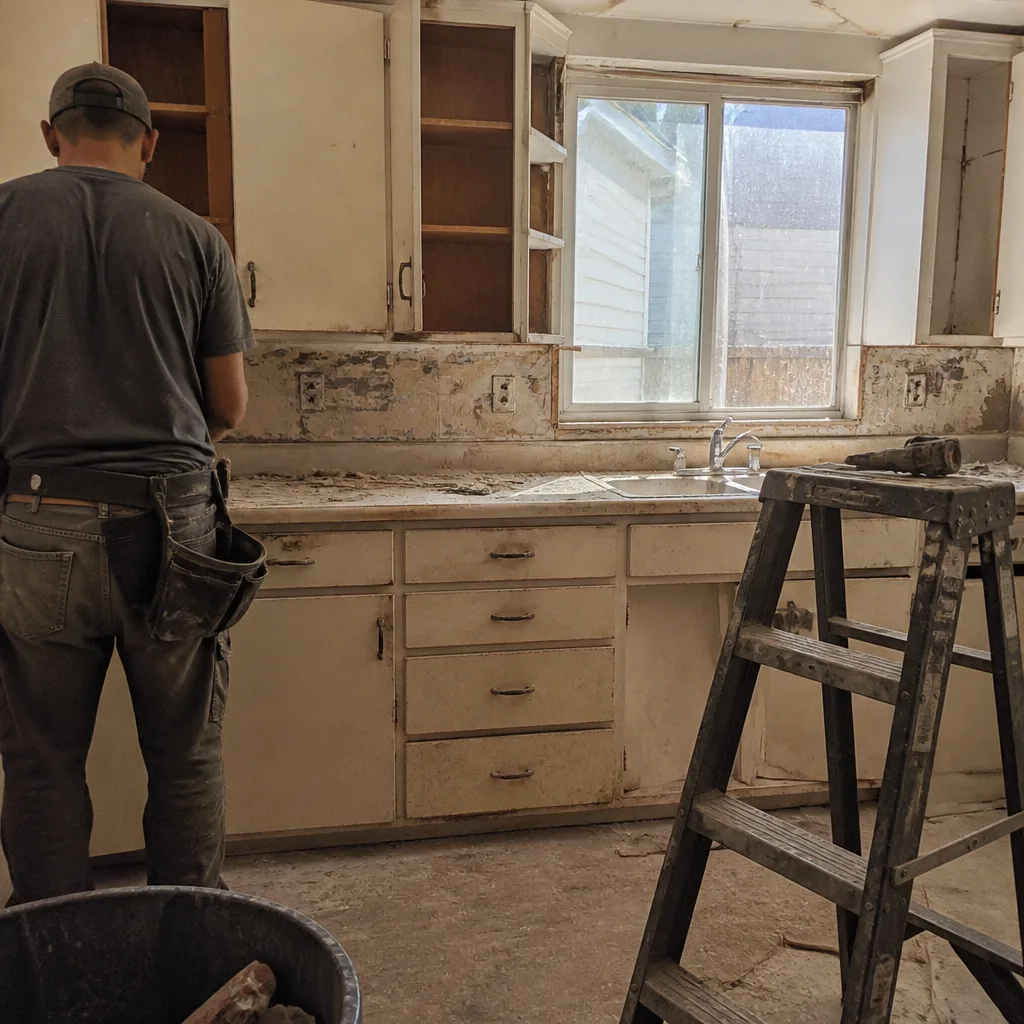
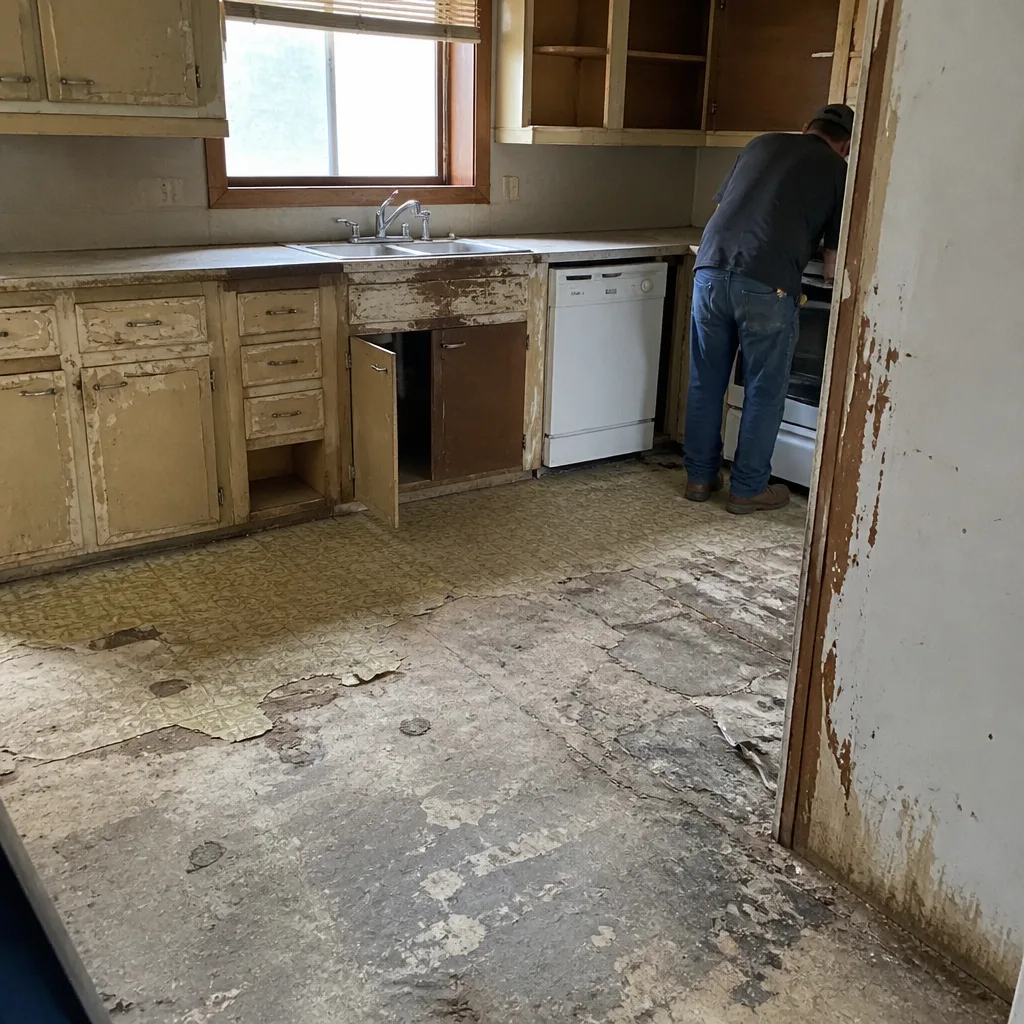 Before
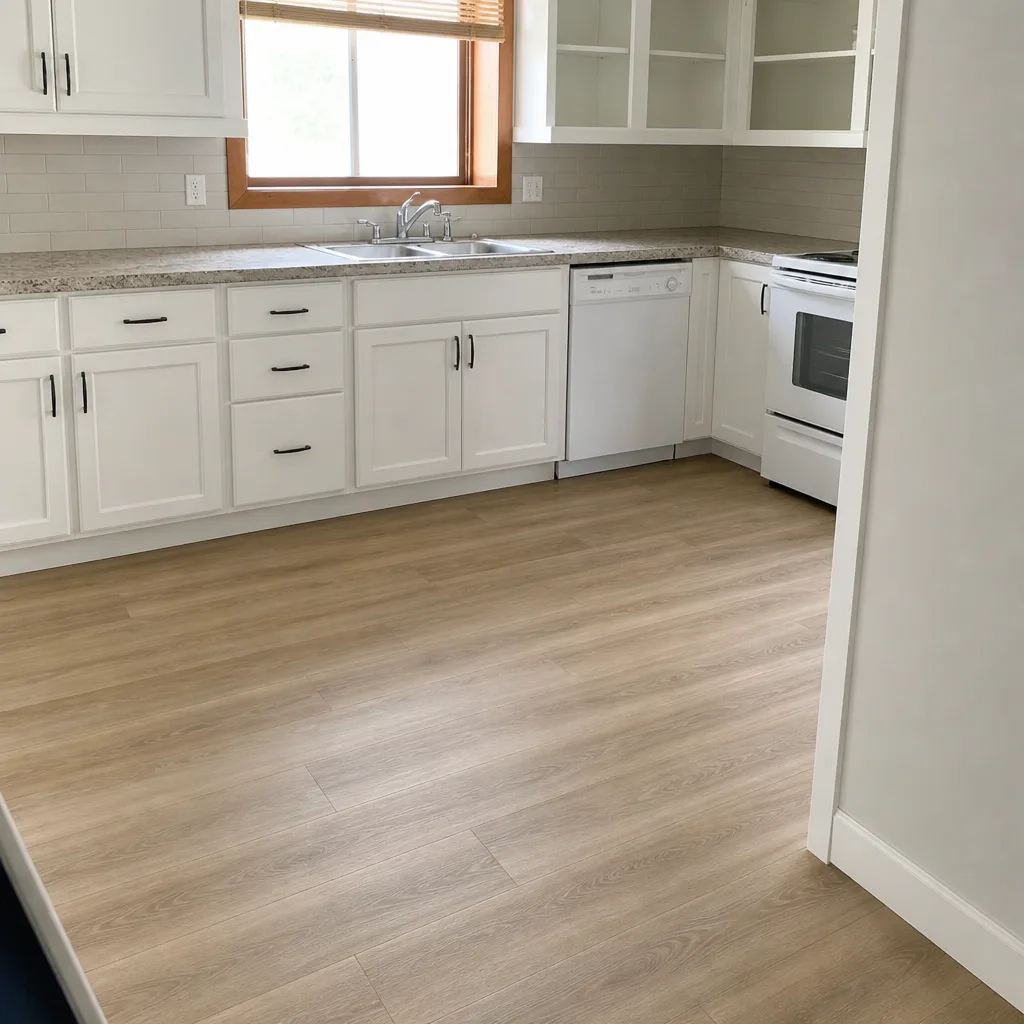 After
 Before
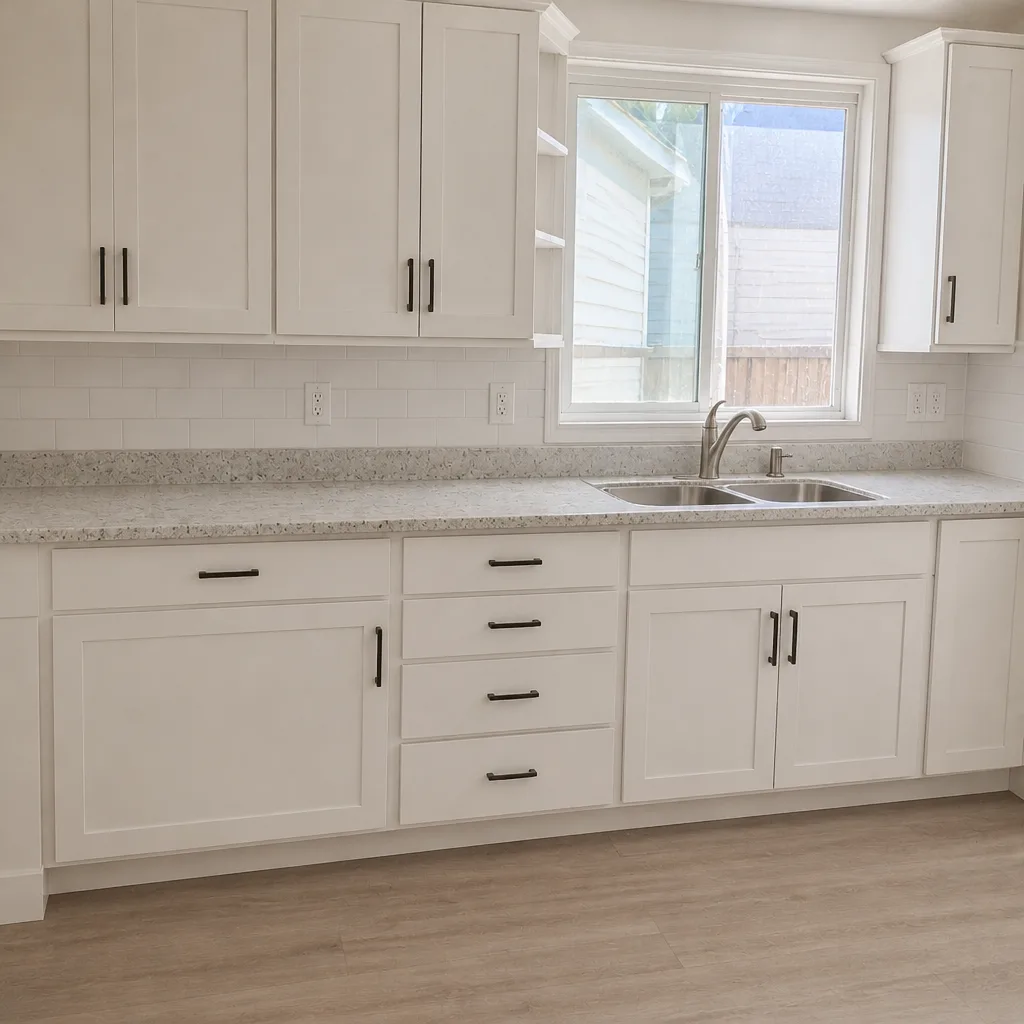 After
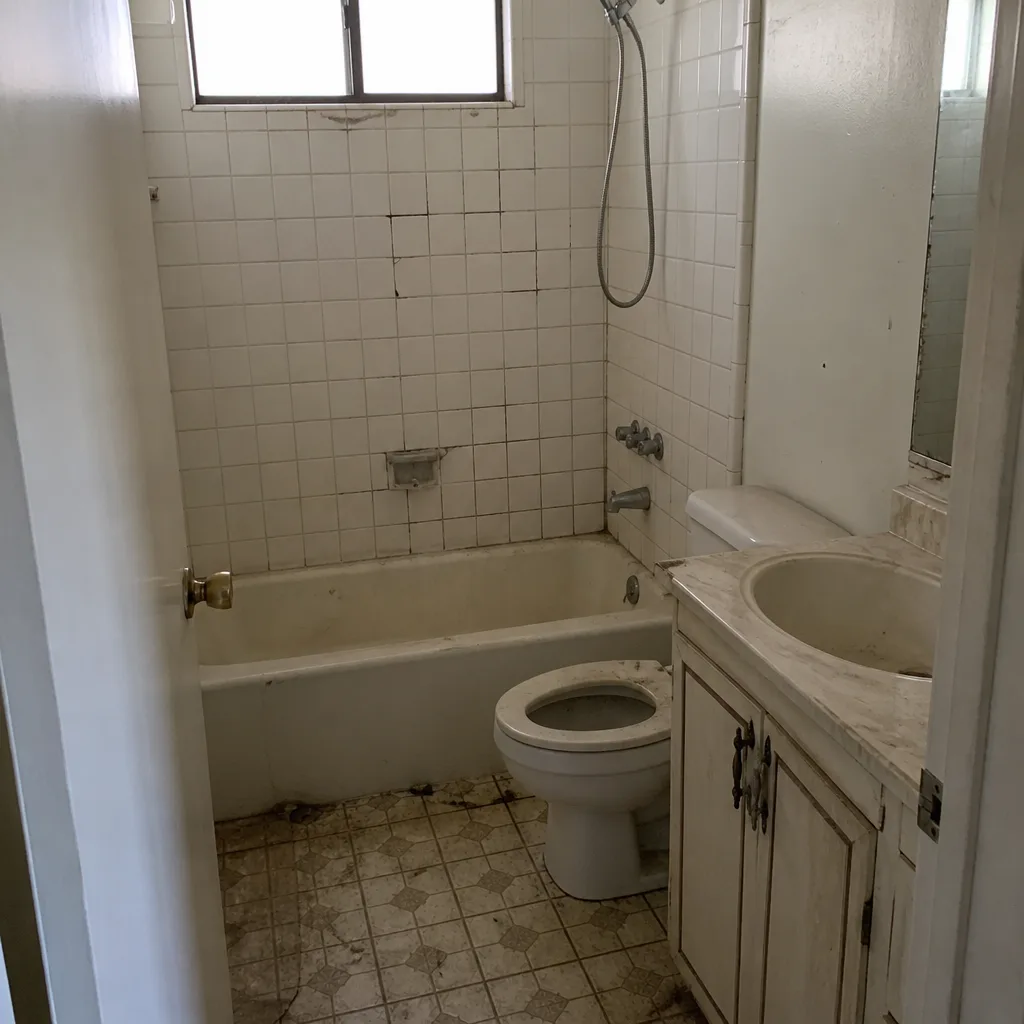 Before
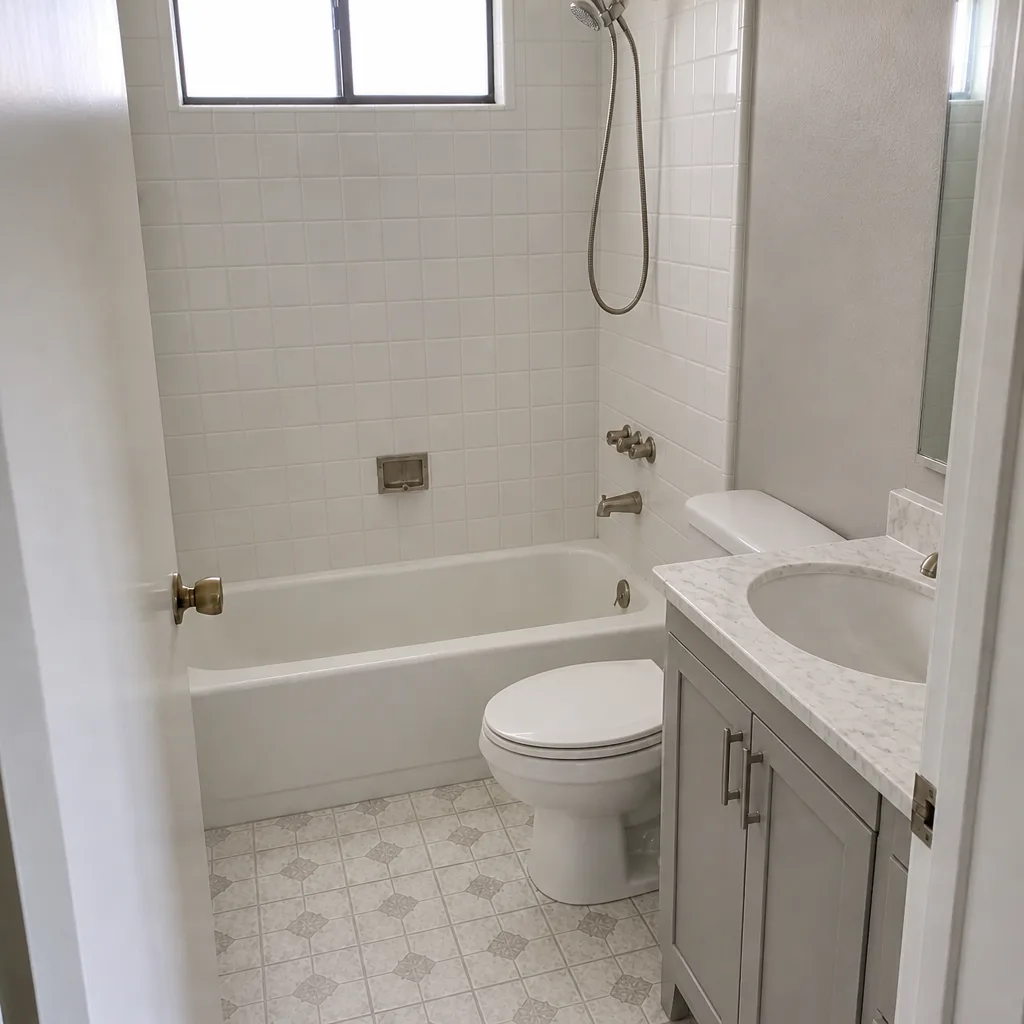 After
When to Call a Professional
Call a professional before you start if the project involves any of these: electrical circuits or outlets being added or moved, any gas line change, moving a sink or appliance water line, removing or moving a wall, cabinet re-hanging where a load-bearing install is required, or anything the local building department requires a permit for. Also call if the kitchen is in a home built before 1980 and you plan to pull up flooring, or if you’re sold on doing the demo yourself but don’t have a disposal plan. These aren’t the “if you’re not comfortable” categories – they’re the consequence categories, where a mistake fails inspection, voids a warranty, or causes water damage after the kitchen’s finished. Penhallow Remodeling is part of the Kingswell family of companies, and every project we take on is priced in writing before any work starts, permits pulled and inspected, and backed by a written 365-Day Done Right Promise. Our technicians have up to 22 years of experience, arrive in uniform and are background-checked, and our live phone coverage is answered by a real person around the clock. If you’re in Santa Clarita and you want to know where the line falls for your kitchen, we’ll walk the room with you and put the professional scope in writing. A free estimate is the whole ask – call (866) 383-6693 to schedule it.
Frequently Asked Questions
DIY is cheaper on the cosmetic tasks and considerably more expensive when an unpermitted electrical, plumbing or structural mistake fails inspection or voids a warranty. The honest calculation: painting cabinets, tiling a backsplash and swapping a faucet can save you $2,500 to $4,500 against professional pricing, but you’re spending 60 to 90 hours of your own time. On the code-related scope, contractor pricing is the safer money by a wide margin, because the cost of a correction or a failed warranty is far larger than the labor difference.
Yes, for any work involving electrical circuits, plumbing relocation, gas lines or structural changes. Permit requirements vary by the scope of work and the local building department, and pulling a permit is the cheap part of the deal: typically a few hundred dollars versus thousands to correct unpermitted work later. The contractor should be the permit holder on the professional scope. When you get a written price from us, the permitting we know the work requires is included.
Yes, if you plan the disposal and the hazard testing first. A professional demo and haul-away for a standard kitchen typically runs $1,200 to $3,000. If you do it yourself, you still need to budget $450 to $800 for a roll-off dumpster in Santa Clarita, plus $30 to $120 for asbestos testing on pre-1980 flooring and mastic. Do the math before you decide – if the disposal plan catches you by surprise, the savings shrink fast. Call (866) 383-6693 for a free estimate on the professional scope.
It can. Most cabinet and countertop manufacturers’ warranties require installation by a licensed professional, and if a third party installs the product, the manufacturer’s guarantee may not apply. That’s separate from the labor guarantee and the two can both be lost. When we install Cambria quartz or KraftMaid cabinetry, both the product warranty and our own written guarantee are in effect for the customer. Ask the manufacturer before you install it yourself, not after.
Typically $150 to $450 in materials for a 20-door kitchen – quality primer, cabinet-grade paint, sanding supplies, degreaser, painter’s tape and a sprayer or good brushes. The labor is the real cost: 30 to 50 hours of homeowner time once prep and drying are counted. A professional spray finish for the same scope runs roughly $2,600 to $5,500. The savings are real if you’re patient with prep and have a well-ventilated space. Call (866) 383-6693 for a free estimate if you’d rather hand it over.
Unpermitted electrical work is the most expensive to correct, because the fix means opening finished walls to add proper circuits and pass inspection – typically $400 to $1,800 in rework depending on how much wall opens up. The second most common is skipping the asbestos test on a pre-1980 flooring demo, which can trigger a stop-work. A close third is tiling over a soft substrate, where the failure is a cracked backsplash six months later. The fix for each is straightforward when it’s caught early and expensive when it isn’t.
The Bottom Line
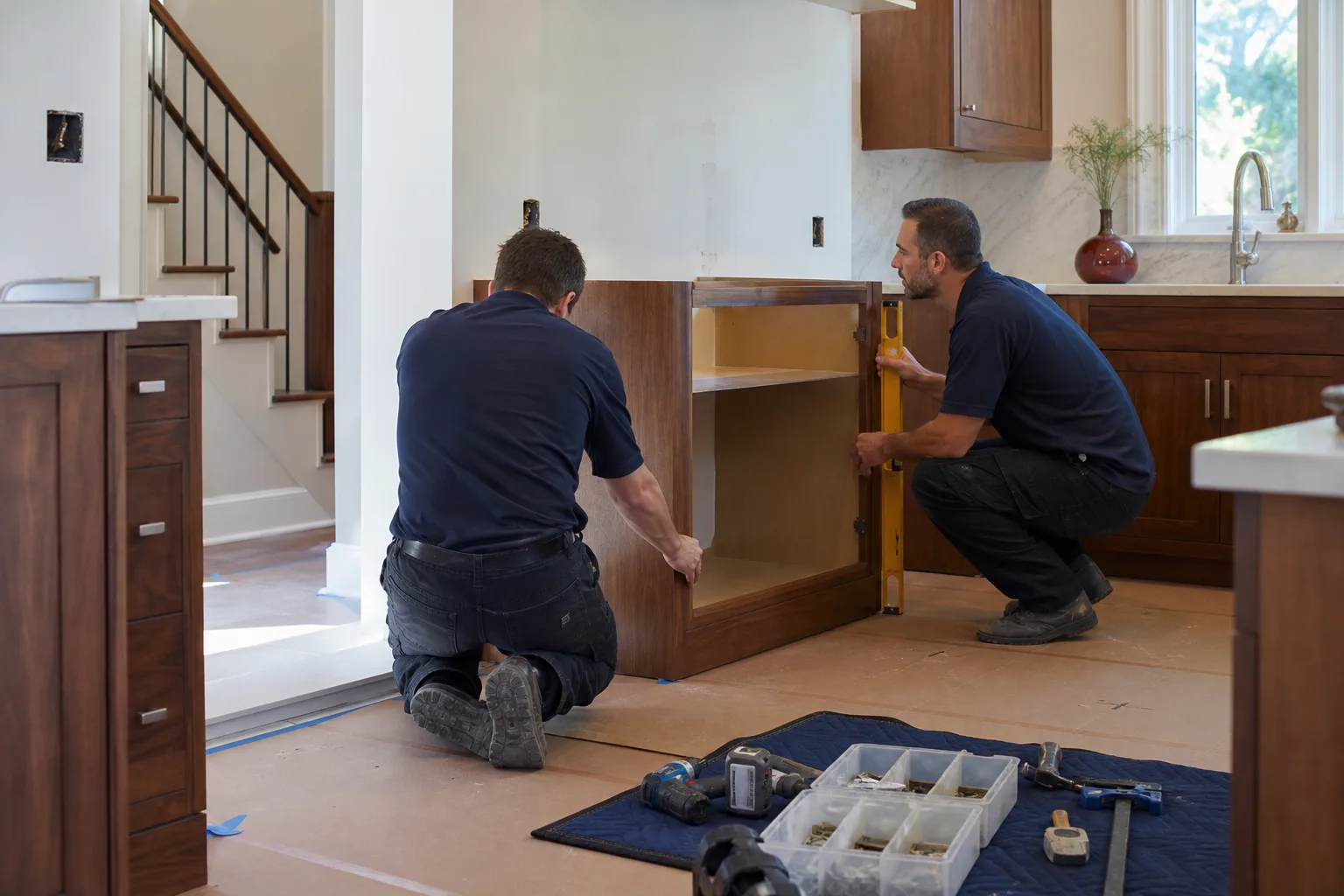
The DIY question in kitchen remodeling isn’t about talent – it’s about consequence. Paint your cabinets, swap your hardware, install open shelving, tile a backsplash over good substrate, and replace your faucet on existing plumbing if the shutoffs are sound. Hand the electrical, the gas, the plumbing relocation, the structural changes and anything that needs a permit to a licensed professional, because that work fails inspection, voids warranties, or floods your kitchen months after you’ve stopped thinking about it. Check for asbestos before you demo a pre-1980 kitchen. Plan the disposal. Put the scope split in writing on a hybrid project. Do that and your kitchen comes out right. If you’re in Santa Clarita and want the professional half priced in writing – written price before work starts, permits pulled and inspected, 365-Day Done Right Promise on the finished job – call (866) 383-6693 for a free estimate. Visit our Penhallow Remodeling Santa Clarita home page to see how we work, or explore Bathroom Remodeling in Santa Clarita if you’re weighing a second project. The team at Penhallow Remodeling Santa Clarita is here to give you a number before the first cabinet comes out.
Written by the team at Penhallow Remodeling Santa Clarita.