Last updated November 18, 2026

Free written scope consultation - allowances, timeline, and change-order rules on paper before a single trade is scheduled
How to Hire a Construction Contractor in Santa Clarita: A Step-by-Step Guide
Three bids sounds like due diligence until you realize two of them are verbal quotes on a notepad and the third doesn’t specify who does the tile work. At that point, you’re not comparing prices, you’re comparing assumptions. In Santa Clarita, where the contractor pool runs from established local shops with real references to storm-chaser crews that roll in after a wind event and disappear just as fast, the vetting process matters more than the bid count. This guide walks you through what a written proposal actually needs to say, how to verify a license in under two minutes, and how to spot the line items that get quietly cut to hit a low number.
Quick Answer
To hire a construction contractor in Santa Clarita, verify the contractor’s license on the CSLB website, insist on a written proposal that specifies scope, materials by brand and grade, a milestone-based payment schedule, permit responsibility, and a written warranty term, then check three past-client references with specific questions. Compare what each bid includes line by line, not just the total at the bottom. The lowest bid is often the highest-risk bid because it cuts substrate prep, permit fees, and haul-away to reach a lower number.
Styles & brands we work with
- Kitchen remodeling
- Bathroom remodeling
- Home additions & ADU
- Roofing
- Windows & doors
- Driveway & pavers
- Fence
Table of Contents
- Step 1: Verify the Contractor’s License on the CSLB Website
- Step 2: What Every Written Proposal Must Include
- Step 3: Why the Lowest Bid Is Usually the Highest Risk
- Step 4: How to Run a Reference Check That Gets Real Answers
- Step 5: Written Guarantee vs. Verbal Promise
- Step 6: Santa Clarita Climate and Code Considerations
- Common Mistakes to Avoid
- When to Call a Professional
Step 1: Verify the Contractor’s License on the CSLB Website
California’s Contractors State License Board runs a free public lookup at cslb.ca.gov. Enter the license number or the business name and you’ll have the answer in under two minutes. Every contractor bidding a job over $500 in California must hold an active license, and pulling the record yourself is the fastest way to confirm you’re hiring someone who can legally do the work.
The status field is where homeowners get tripped up. Here’s what each one means for your legal protection:
- Active – the license is in good standing and the contractor can legally contract work. This is what you want to see.
- Suspended – the license is on hold, usually for a board action, a lapsed bond, or unpaid judgments. A suspended contractor cannot legally enter a contract, and you lose the protection the license is supposed to provide.
- Expired – the renewal wasn’t paid. Contracting work on an expired license is illegal in California, and any contract you sign with an expired contractor is unenforceable in court.
- Inactive – the contractor is licensed but not currently contracting. Sometimes indicates a retired operator still fielding calls.
Scroll down to the “Personnel” section and confirm the name of the qualifying individual on the license against the person you’re actually talking to. If the name doesn’t match, ask why. A subcontractor arrangement on a $40,000 remodel should be spelled out in the proposal, not discovered at the permit counter. The record also shows any disciplinary actions, complaints, and arbitration awards. Read them. A single complaint about a slow punch list means something different than three complaints about abandoned jobs.
One more Santa Clarita-specific check: the CSLB record shows the address the license is registered to. If it’s a P.O. box in a different county from the one on the truck, that’s a question worth asking before you sign anything. Local contractors with a real Santa Clarita footprint show up differently in the record than a crew operating out of a mailbox.
Step 2: What Every Written Proposal Must Include
A bid without these five elements isn’t a proposal – it’s a conversation you’ll be having again at the end of the job, usually with a different number attached. Before you sign anything, confirm all five are in writing:
- Scope of work. Specific tasks, room by room, with quantities where they matter (linear feet of tile, number of cabinets, gallons of paint). “Bathroom remodel” is not a scope. “Remove existing tub, install 60-inch Kohler tub, retile surround with 12×24 ceramic, install new Moen shower valve” is a scope.
- Materials specified by brand and grade. KraftMaid vs. a builder-grade line from an unnamed cabinet supplier changes the price by thousands. Cambria quartz, Silestone, and Caesarstone each price differently. James Hardie siding carries a different material cost than a generic fiber cement. The proposal should name the line and the grade, not just “quartz countertops.”
- Payment schedule tied to milestones. A deposit to start, then payments released as demo, rough-in, drywall, and finish each complete. California caps most residential deposits at $1,000 or 10% of the contract price, whichever is less, and every payment after that should be tied to a milestone you can actually see.
- Permit responsibility. Who pulls the permit, who pays the fee, and who meets the inspector. Santa Clarita jobs that involve structural, electrical, plumbing, or mechanical work need permits, and the cost of pulling them should be visible in the bid, not added later.
- Written warranty term. A number of days, months, or years, plus a plain-language statement of what happens if something fails inside that window. “We stand behind our work” is not a warranty term.
If a proposal is missing three of these five, you’re comparing a real bid against a wish. Ask for a revised written proposal before you move forward – any contractor who can’t produce one is telling you something. When we write a proposal under The Kingswell Way, the price is fixed before the work starts and the number on day one is the number on the invoice. That’s a baseline we’ve built around. It isn’t a feature every shop offers.
Step 3: Why the Lowest Bid Is Usually the Highest Risk
The lowest bid in Santa Clarita is statistically the highest-risk bid, and it’s usually because three line items got cut to reach that number. These are the ones we see stripped most often when a homeowner brings us a competing proposal to compare:
- Substrate prep. The cement board substrate (the moisture-resistant layer behind your tile) is the difference between a shower that lasts 15 years and one that fails in three. Cutting it saves the contractor a couple thousand dollars and costs you a $12,000 redo later. The same applies to proper drywall taping, floor leveling, and waterproofing membranes.
- Permit fees. Pulling a permit for a kitchen or bath remodel costs real money in the City of Santa Clarita, and an unpermitted job can complicate a future sale. If a bid has no permit line item, ask who’s pulling it.
- Haul-away and disposal. Demo debris, old cabinetry, removed tub, and the dumpster rental that goes with them are a real cost. A bid that doesn’t mention disposal means someone will be looking at you at the end of the job for a bill you didn’t expect.
We’ve seen bids in Valencia and Stevenson Ranch come in $8,000 to $12,000 under market for a full bathroom remodel, then balloon past the higher bid by the third week once the change orders landed. The homeowner paid more than the middle bid, plus the stress, plus the timeline slip. A fair price for a full primary bath remodel in Santa Clarita typically runs $18,000 to $40,000 depending on tile selection, fixture grade, and whether the layout is moving. A kitchen with new cabinets, counters, and layout changes usually lands between $28,000 and $65,000. Those ranges exist for a reason – the middle of the range is where structural repairs, code upgrades, and honest labor costs actually show up.
Ask every contractor to itemize substrate prep, permit fees, and disposal as separate lines. Then compare. If one bid is $9,000 lower and those three lines are missing, you know where the difference lives. For a deeper look at what full-kitchen scope actually includes, see our page on Kitchen Remodeling in Santa Clarita.
Step 4: How to Run a Reference Check That Gets Real Answers
“Were you happy with the work?” gets you a polite yes and nothing else. Ask these three questions instead. The answers will tell you more than any review page:
- “How did the final invoice compare to the original proposal, and what changed?” A reference who says “it came in exactly where they said” is telling you the contractor quotes accurately. A reference who says “it was a little more because we added x” is telling you the contractor documents changes. A long silence followed by “well, there were some surprises” is telling you everything else.
- “Did they show up when they said they would, and how did they handle it when they didn’t?” Every schedule slips somewhere. What matters is whether the contractor communicated before the slip or after the homeowner called three times. This is where the difference between a real local shop and a fly-by operation shows up, and it’s the single most common complaint we hear from homeowners who call us after a bad job.
- “Has anything failed since the work was finished, and did they come back?” This separates a guarantee from a promise. A contractor with a real written guarantee gets called back and returns. A contractor with a verbal promise stops returning calls. Ask specifically about a call-back situation and see how the reference describes the response.
Ask for references from jobs completed in the last 18 months, in Santa Clarita. Remodeling work from 2015 doesn’t tell you how the current crew operates. A contractor with a strong local reputation in Santa Clarita should be able to name the neighborhoods where they’ve worked recently – Newhall, Canyon Country, Saugus, Valencia, Stevenson Ranch – and match reference addresses to real projects you can look at from the street.
Reference checks work the same way for a bathroom. Our Bathroom Remodeling in Santa Clarita page covers what a licensed bathroom job should include, but the vetting process is identical: real references, recent jobs, specific answers.
Step 5: Written Guarantee vs. Verbal Promise
A written guarantee states a specific term, what it covers, and what the contractor’s obligation is if the work fails. A verbal promise of “we stand behind our work” states none of those things, and it’s worth exactly what a handshake is worth when the contractor’s phone stops working.
Here’s how to tell which one you’re getting before you sign. Ask the contractor to write the warranty term into the contract. Not a handshake, not a sentence in the proposal body – a specific numbered clause. It should answer:
- How many days, months, or years does the warranty run?
- What specifically is covered (labor, materials, installation methods)?
- What happens if a covered item fails – who pays for the return visit and the repair?
- Does the manufacturer warranty on materials (cabinets, countertops, fixtures) pass through to you alongside the contractor’s labor warranty?
We install Cambria quartz, which carries its own lifetime warranty alongside ours, and KraftMaid cabinetry comes with a manufacturer warranty that runs on top of the labor guarantee. The layers matter. A written guarantee should describe each layer clearly enough that you know who to call when one of them activates.
The 365-Day Done Right Promise works like this: if the work fails inside the year, we come back and fix it at no charge. That’s a written commitment, not a verbal one, and it applies to every job. A contractor who hesitates when you ask them to write the warranty term into the contract has just told you which kind of guarantee you’re actually getting. General contractor scope for large jobs like whole-home remodels is covered on our General Contractor in Santa Clarita page, and the same guarantee standard applies there.
Step 6: Santa Clarita Climate and Code Considerations
Santa Clarita sits in a high-desert transition zone where summer temperatures regularly cross 100°F and winter nights drop near freezing. That swing matters for what gets installed and how it’s installed. Here’s where local climate affects your contractor selection:
- Exterior doors and windows. Temperature cycling of 50°F or more in a single day is normal here. Door and window units need proper flashing, sealant rated for the swing, and frame materials that hold up. Brands like PGT and CWS are specified on local jobs because their thermal performance ratings match our summers and their units hold their seal through the winter cold snaps.
- Exterior siding. James Hardie fiber cement siding, installed with proper clearance above grade and a rain-screen gap, performs much better in Santa Clarita heat than vinyl. It doesn’t warp and it holds paint through the sun. If a bid specifies a generic fiber cement panel, ask why not Hardie.
- Stucco and paint. UV exposure here is aggressive. Poor prep – skipping the bonding agent, painting over dust – fails in 18 months. The prep cost is the difference between a 10-year paint job and a three-year one.
- Permits and code. The City of Santa Clarita Building and Safety Division has its own permit portal, timelines, and inspection schedule. Additions, structural changes, electrical panel work, and gas line modifications all need permits and inspections. A contractor who tells you a permit “isn’t needed” for a bathroom layout change that moves the drain is telling you they’ll cut a corner on your job.
Seismic retrofit requirements also apply to older homes, especially pre-1980 construction in Newhall and Canyon Country. If your inspector flags anchor bolt or cripple wall issues during a remodel, expect a line item. That’s not a contractor up-charging; it’s the code catching up to the building.
For window replacements specifically, ask what thermal performance rating the unit carries and how it’s flashed. CSI and ES Windows are common in local specs for the same reason PGT is – they hold up to the temperature cycle. Whichever brand ends up in the proposal, it should be named by line and model, not just “new windows.”
Common Mistakes to Avoid
- Accepting a verbal quote as a bid. A number on a notepad isn’t a proposal. Without a written scope, the materials, the payment schedule, and the warranty term, you’re comparing conversations.
- Comparing the total price only. The $9,000 cheaper bid is usually missing substrate prep, permit fees, and haul-away. Compare line items, not totals.
- Paying more than 10% down. California caps residential deposits at $1,000 or 10% of the contract price, whichever is less. A contractor who wants 30% to start is a contractor without the working capital to finish your job.
- Letting the contractor skip the permit. Unpermitted work in Santa Clarita follows the house through the next sale. Ask for the permit number and confirm it with the city.
- Trusting a review count. A five-star average across 200 reviews from out-of-county projects tells you nothing about a Santa Clarita kitchen. Ask for references from jobs on your side of the valley, in the last 18 months.
- Hiring a storm-chaser after a wind event. When the Santa Ana winds hit the SCV and roofs or fences fail, out-of-area crews show up with damage-repair signs. Ask for the CSLB license number and check the registered address before you sign.
- Signing without a written warranty term. “We stand behind our work” is worth what it costs. A numbered clause stating the term, the coverage, and the remedy is the only version that survives a dispute.
When to Call a Professional
Some jobs belong in the DIY column. Others don’t, and pretending otherwise is how homeowners end up paying twice. Call a licensed contractor when the work involves moving plumbing or gas lines, changing the electrical panel or adding circuits, structural changes like removing a wall, permit-required work of any kind, or anything in a bathroom where the moisture barrier and substrate have to be right the first time. Whole-home remodels and kitchen layout changes fall in the same category – the sequencing alone is a full-time job, and one out-of-order step shows up in a failed inspection six weeks later.
If the work is a tile repair that failed once, a tub surround that’s cracked, or a door that doesn’t close right after a previous contractor “fixed” it, that’s exactly the kind of job a written guarantee is meant for. We offer free estimates in Santa Clarita and write the price before any work starts. Call (866) 383-6693 for a free estimate, and a real person will pick up.
See the difference
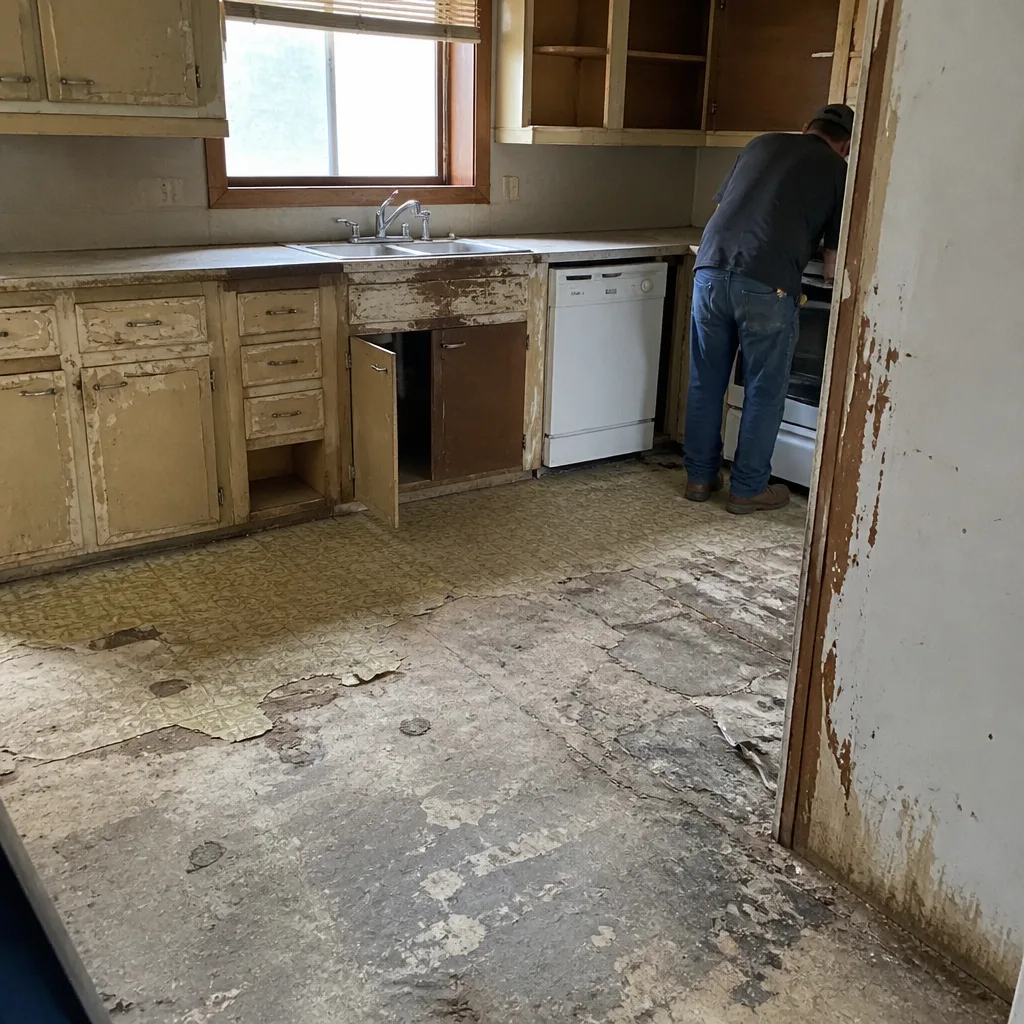 Before
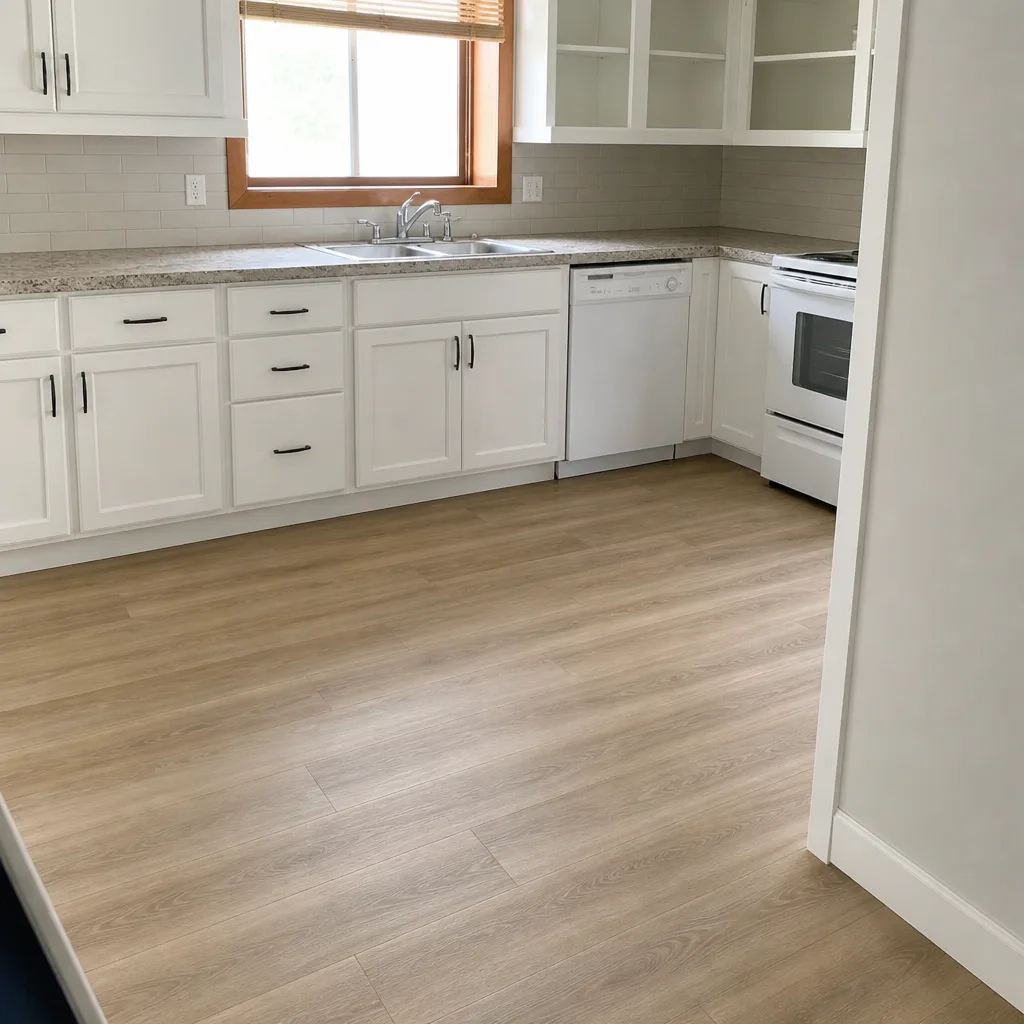 After
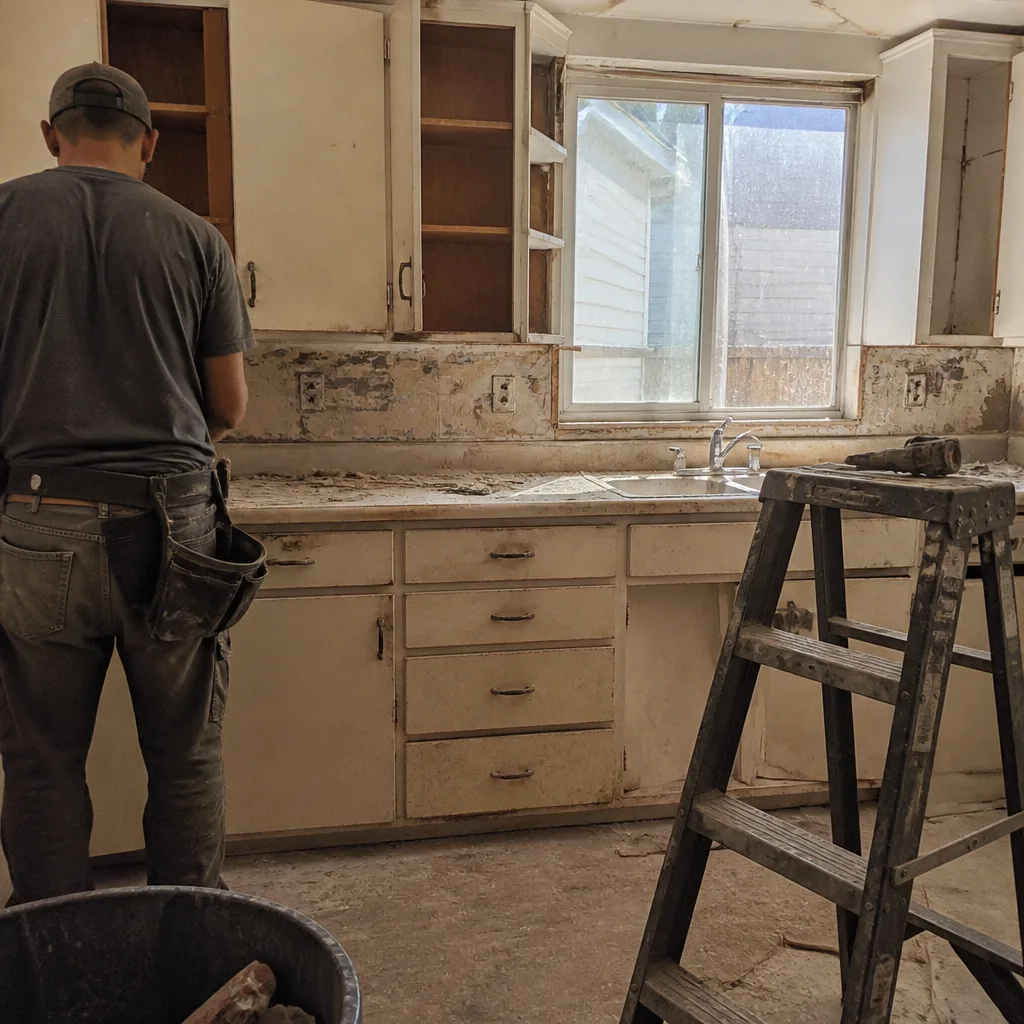 Before
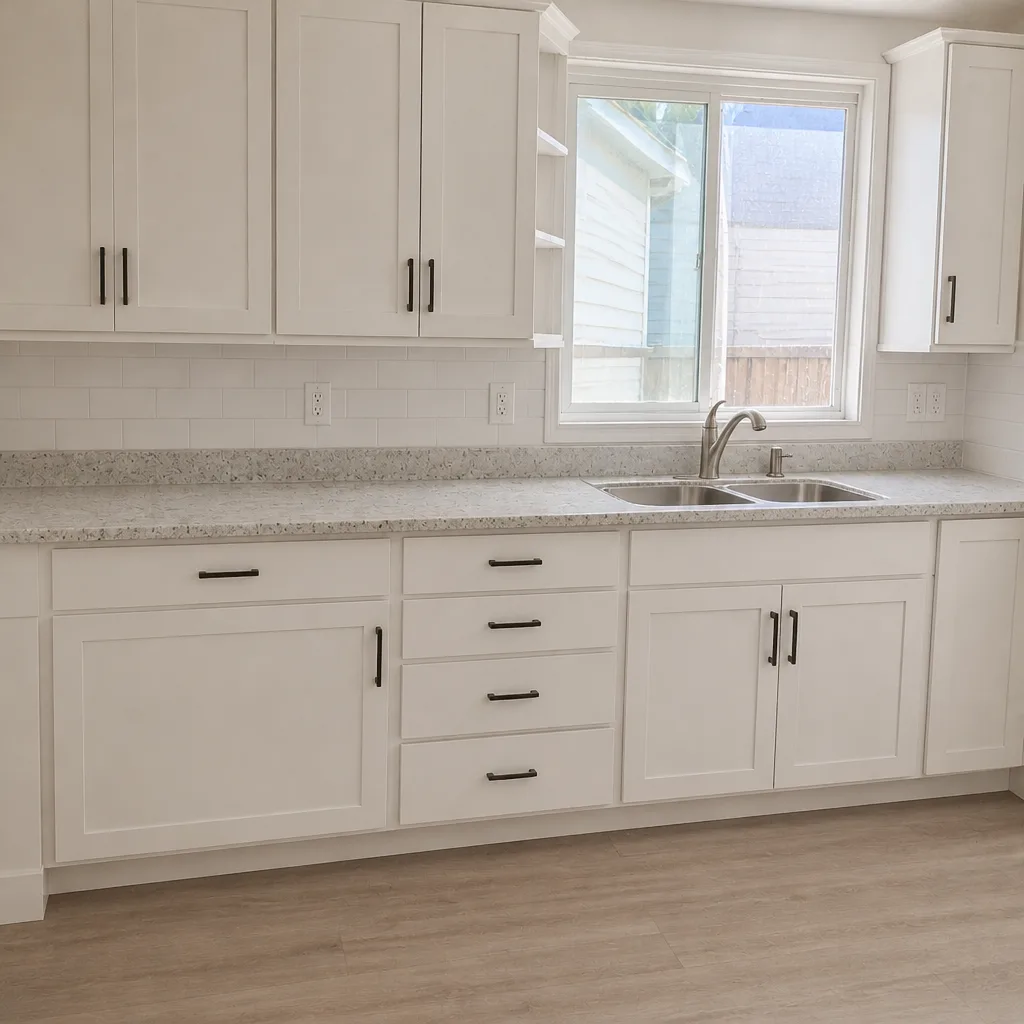 After
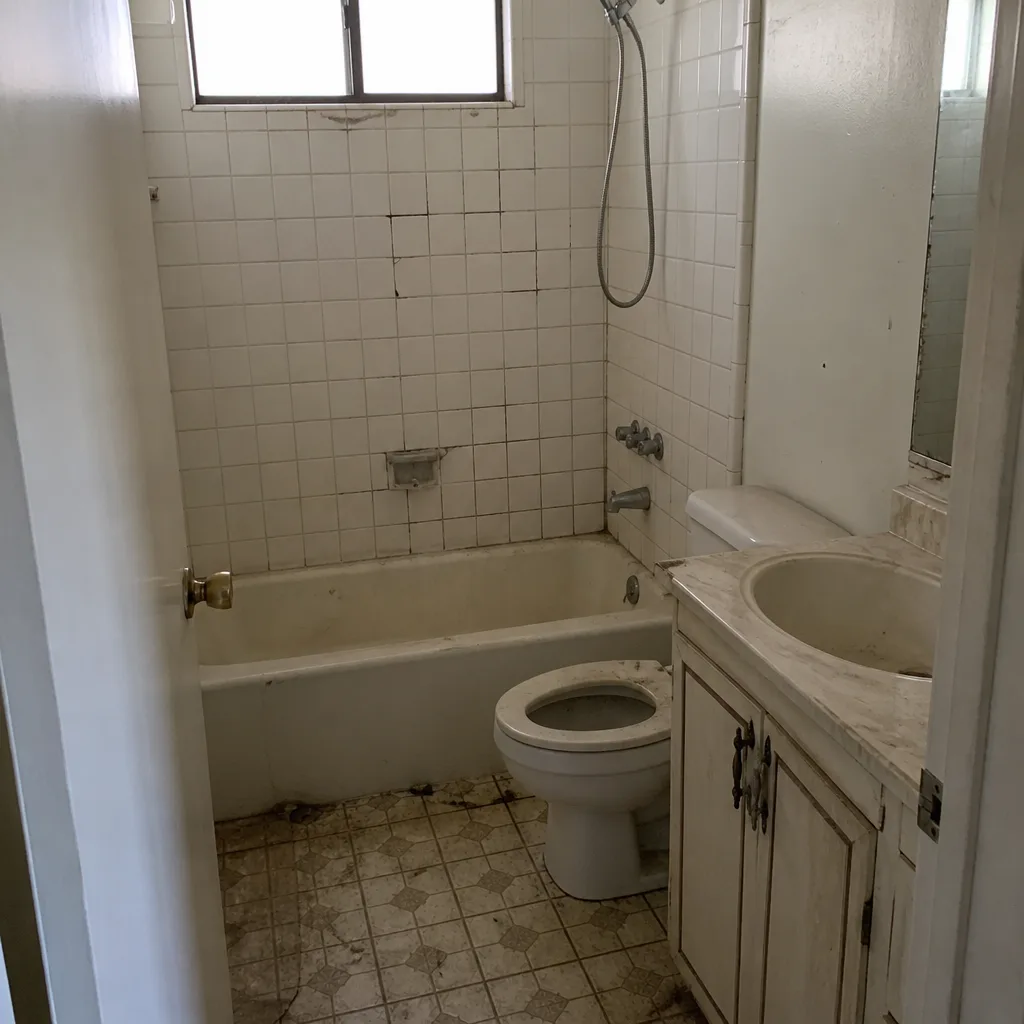 Before
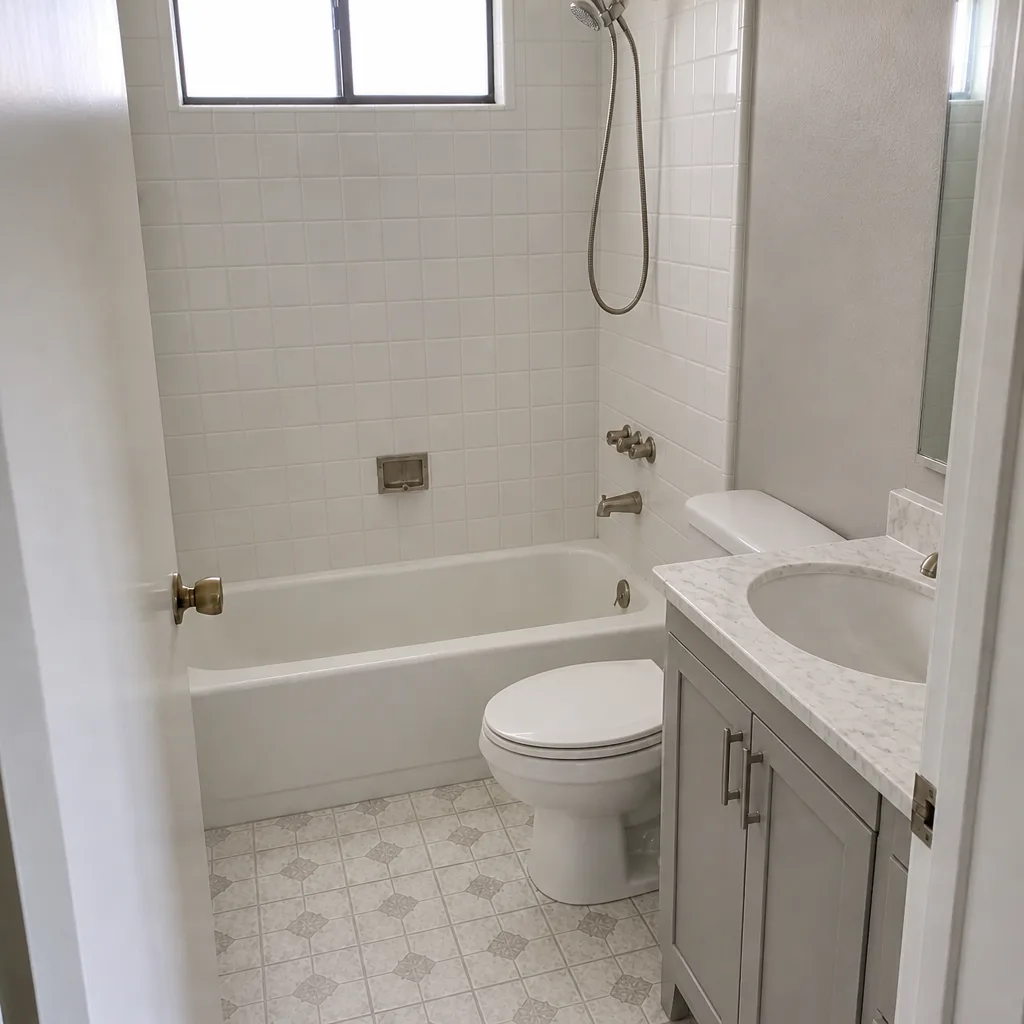 After
Frequently Asked Questions
Go to cslb.ca.gov and enter the license number or business name – the lookup takes under two minutes. Confirm the status reads “Active,” then check the Personnel section to make sure the qualifying individual matches the person you’re dealing with. The record also shows disciplinary actions and complaints, which are worth reading before you sign. Call (866) 383-6693 if you want to compare a proposal against a written one – estimates are free.
A full kitchen remodel in Santa Clarita typically runs $28,000 to $65,000, depending on whether the layout is moving, the cabinet line selected (KraftMaid and Wellborn sit at different price points), and the countertop material. Cambria and Caesarstone price differently than Silestone, and cabinet refacing can cut the number substantially if the boxes are solid. The lowest bid is usually low because substrate prep, permit fees, or haul-away got cut. Call (866) 383-6693 for a written itemized quote – estimates are free.
It shouldn’t, if the proposal was written properly. A written price before any work starts is the baseline – the number on day one should be the number on the invoice. Changes happen only when you request them or when a hidden condition surfaces during demo (rot behind a tub, an unpermitted prior job, a code violation), and those should be documented in a written change order before the work continues. Call (866) 383-6693 for an exact quote in writing.
A written proposal in California should include the scope of work with quantities, materials specified by brand and grade, a payment schedule tied to milestones (with deposits capped at $1,000 or 10%, whichever is less), permit responsibility, a written warranty term, and a start and finish window. If any of those five are missing, the proposal isn’t ready to sign. Call (866) 383-6693 to see what a written proposal looks like – estimates are free.
Yes. Permits for structural, electrical, plumbing, or mechanical work are pulled through the City of Santa Clarita Building and Safety Division, and the fee is visible in the written proposal as a separate line item. We meet the inspector on-site and pass the final inspection before the job closes out. If a contractor tells you permits aren’t needed for a layout change that moves plumbing or electrical, get a second opinion. Call (866) 383-6693 to talk through your project – estimates are free.
A 365-Day Done Right Promise means that if the work fails inside the first year, the contractor comes back and fixes it at no charge – the return visit and the repair are covered. That’s a written commitment, not a verbal promise, and it should be spelled out as a numbered clause in the contract with the term, the coverage, and the remedy stated plainly. Ask to see it in writing before you sign. Call (866) 383-6693 for a free estimate and a written guarantee on your job.
The Bottom Line
Hiring a contractor in Santa Clarita comes down to what’s in the written proposal, not how many bids you collected. Verify the license on the CSLB website in under two minutes. Insist on a proposal that specifies scope, materials by brand, milestone-based payments, permit responsibility, and a written warranty term. Treat the lowest bid as the one that needs the most scrutiny, not the one that wins. Ask past clients the three questions that get real answers instead of polite ones. Get the guarantee in writing, dated and signed, before the first tool comes out of the truck. The homeowners who call us after a bad job almost always know which step they skipped – and none of them wish they’d collected a fourth bid.
If you’d like to see what a written proposal and a written guarantee look like on a real Santa Clarita kitchen or bath, start with our Penhallow Remodeling Santa Clarita home page, or jump straight to our Kitchen Remodeling in Santa Clarita and Bathroom Remodeling in Santa Clarita pages for what’s included. For whole-home scope, our General Contractor in Santa Clarita overview covers the permit and sequencing side. Call (866) 383-6693 for a free estimate – a real person answers, the price comes in writing, and the guarantee comes with it.
Written by the team at Penhallow Remodeling Santa Clarita.