Last updated November 18, 2026
Free written scope consultation - allowances, timeline, and change-order rules on paper before a single trade is scheduled
DIY vs Professional Bathroom Remodeling: What’s Safe to Do Yourself
Here’s the part most DIY guides leave out: a tile job that looks flawless on day one can still fail by year two. Not because the tile was set wrong, but because the waterproofing layer behind it was skipped or done badly. Water doesn’t care how good your grout lines look. It finds the path you didn’t seal. The bathroom is where homeowner confidence most reliably outpaces homeowner skill, and the errors hide inside walls for years before they show up as soft drywall, a spongy subfloor, or a $14,000 repair. This guide sorts bathroom work by what failure actually looks like, not by how hard the task appears. We’ve watched Santa Clarita homeowners learn this the expensive way, and we’d rather you didn’t.
Quick Answer
You can safely DIY painting, hardware swaps, vanity light replacement, mirror installation, and most cosmetic upgrades in a bathroom. You should not DIY shower tile, tub surrounds, waterproofing membranes, drain work, or any change that moves plumbing or electrical. The dividing line isn’t difficulty, it’s consequence: the safe tasks fail visibly and cheaply, while the risky ones fail invisibly and expensively. If the job sits behind a wall, under a tile, or in contact with water on a daily basis, it belongs to a licensed crew.
Styles & brands we work with
- Kitchen remodeling
- Bathroom remodeling
- Home additions & ADU
- Roofing
- Windows & doors
- Driveway & pavers
- Fence
Table of Contents
- The honest DIY ceiling for bathrooms
- The waterproofing knowledge gap
- California permit reality for bathrooms
- What a DIY redo actually costs
- How to partner with a GC and save without the risk
- Santa Clarita climate and hard water: why local matters
- Common mistakes to avoid
The Honest DIY Ceiling for Bathrooms
The useful way to sort bathroom projects is by what a failure costs, not how confident you feel holding a drill. Painting a bathroom that’s 8 by 10 feet runs maybe $60 in supplies and a Saturday. If it goes badly, you sand and repaint. If a shower pan install goes badly, you find out 18 months later when the subfloor under the tile has rotted through to the joists.
Genuinely low-risk, safe to DIY:
- Painting walls, ceilings, and trim. Use a bathroom-rated paint with mildew resistance, especially on the ceiling where steam collects.
- Swapping cabinet hardware, towel bars, faucets, and showerheads. A faucet swap is mostly a matter of turning the water off at the angle stops and using fresh thread tape.
- Replacing a vanity light. If it’s a straight fixture-for-fixture swap on the existing box, it’s fine; if you’re adding a new circuit or moving the box, it’s a licensed electrician’s job.
- Hanging a mirror, floating shelves, and a new medicine cabinet, as long as you hit studs or use the right anchors for tile.
- Re-grouting and re-caulking existing tile. This is maintenance, not construction, and it’s worth doing every few years.
High-risk, leave to a pro:
- Shower tile, tub surrounds, and any wet-area tile work.
- Shower pan installation and drain relocation.
- Waterproofing membranes behind tile (cement board, liquid-applied, or sheet membrane).
- Moving a toilet, sink, or tub drain. Supply lines decide whether this is cosmetic or structural.
- Any electrical work that adds a circuit, moves a box, or adds a heated floor.
The top row of that first list costs nothing to get wrong. The second row costs thousands, and it will look fine from the doorway right up until it doesn’t.
The Waterproofing Knowledge Gap
This is the single biggest reason DIY bathrooms fail, and it’s the part every YouTube tutorial skips. The tile is a decoration. The waterproofing behind it is the plumbing system. A licensed tile setter thinks in layers: framing, then cement board substrate (the moisture-resistant layer behind your tile), then a waterproofing membrane, then thin-set, then tile, then grout and sealant. Every layer has a job. Water reaches that sandwich every day, in vapor and in splashes, and it needs somewhere to go.
Here’s what the tutorials consistently underexplain:
- RedGard and liquid membranes need thickness, not just coverage. The manufacturer specifies a wet-film thickness measured in mils, checked with a gauge. Most DIYers paint on one coat and call it done. Two or three coats at the right thickness, applied in crossing directions, is the standard.
- Cement board seams need mesh tape and thin-set, just like drywall, before any membrane goes on. Skip it and the seam opens under thermal movement.
- Shower pans need a pre-slope. The waterproof membrane has to sit on a sloped mortar bed so water flows to the drain. Build the pan flat, and water pools under the tile until the mortar bed stays wet year-round. That’s a rot engine.
- Corners and floor-to-wall transitions need a fluid-applied membrane or a pre-formed corner piece. The 90-degree joints get the most water movement in the room and they’re where failures start.
- Vapor and ventilation are required by code for a reason. Santa Clarita’s dry summers don’t save a bathroom that holds humidity after a shower; exhaust fans and a properly sealed envelope matter here as much as anywhere.
We’re not trying to talk you out of learning. We’re telling you that this is the knowledge a professional carries around because they’ve seen what happens when a step gets skipped. Our technicians have up to 22 years of experience, and most of what they know about waterproofing came from fixing someone else’s failed tile job. That’s a costly education. You don’t have to repeat it.
California Permit Reality for Bathrooms
Permits feel like paperwork, but they’re really the building department’s way of making sure a job meets code before the wall closes. For bathrooms, the line is fairly clear.
No permit usually needed:
- A toilet swap in the same location, replacing a failed toilet for a new one.
- Cosmetic upgrades: paint, tile over existing sound tile (with the right preparation), fixtures, mirrors.
- Replacing a vanity cabinet in the same footprint without moving plumbing.
Permit typically required, even though you own the house:
- Moving or relocating a toilet, tub, shower, or sink drain.
- Any change to the shower pan or the configuration of the shower.
- Adding or relocating electrical circuits, including heated floors and exhaust fan changes.
- Adding or relocating a window in the bathroom.
- Structural changes like removing a wall or widening a doorway.
Santa Clarita operates on the Los Angeles County system, and inspectors expect a permitted job to be done by a licensed contractor for plumbing and electrical work. If you’re planning a full bathroom remodel in Santa Clarita, the permit is part of the process, and a licensed contractor pulls it. The upside: the inspection is a free second set of eyes on the work, which is a lot cheaper than discovering the problem ten years later when you sell.
What a DIY Redo Actually Costs
The tempting math: a full bathroom remodel bid runs in a range, you get a rough quote, you decide to save 30 or 40 percent by doing the tile yourself. Here’s what the math looks like when the waterproofing fails two years in.
For a 5 by 8 foot hall bath, a full professional remodel including demo, waterproofing, tile, fixtures, and vanity typically lands between $14,000 and $28,000 in Santa Clarita, depending on the cabinet line, counter material, and fixture brand. A properly built shower alone, waterproofed and tiled by a pro, runs roughly $5,500 to $11,000 depending on size and tile choice.
Now the redo. A failed DIY shower means demo of the tile and the rotted framing, mold remediation if the damage ran far enough, then rebuilding the pan, membrane, substrate, tile, and trim. That work typically runs 1.3 to 1.8 times the original pro bid because you’re paying for demolition, disposal, and mold work on top of the rebuild. The tile you bought is gone. The cement board is gone. And in a Santa Clarita house, the slab or subfloor under a bad shower may need repair too.
Totaling it up: a DIY shower that fails at year two costs more than the pro would have charged on day one, and you get to live through the demo twice. That’s the sentence we wish we could give every homeowner before they start. Water, substrate, and ventilation don’t compromise.
How to Partner with a GC and Save Without the Risk
You don’t have to choose between “all DIY” and “write the whole check.” The sweet spot for most homeowners is a hybrid: you handle the labor that’s safe and cosmetic, and a licensed crew handles the parts that live behind the wall. You save money, you keep the parts of the project you actually enjoy, and the high-risk work gets done right.
A workable split for a typical bathroom:
- You do the demo. Save money by pulling the old vanity, fixtures, mirror, and clean tile yourself. Be careful around tile you want to keep.
- The crew handles waterproofing, shower pan, tile setting, and plumbing rough-in. This is the part that decides whether the job lasts.
- You paint, install hardware, and hang the mirror after the crew finishes. These are the tasks that add character without risk.
- The crew does the final fixture install and a final inspection pass, and you get a written guarantee on the parts we did.
A good GC will scope this honestly. If a designer or contractor won’t let you do the painting, that’s a sign they’re not set up to partner. If they’ll let you do the waterproofing, that’s a bigger sign. Waterproofing is the one task that’s never worth the savings. If you’re planning a kitchen in addition to a bath, the same split logic applies to kitchen remodeling in Santa Clarita, which has its own versions of the “behind the wall” problem.
Santa Clarita Climate and Hard Water: Why Local Matters
Santa Clarita’s water is hard, and hard water is quietly tough on bathroom finishes. A shower with hard water leaves mineral scale on tile and glass, that scale etches grout over time, and a failed grout line is where water gets behind the tile. This is the local reason we recommend an annual re-caulking and a grout sealer refresh on tile showers, not because the industry likes selling maintenance but because the local water makes it worth doing.
Santa Clarita’s dry, hot summers also matter for a different reason: the temperature swings between summer and winter put real thermal movement on tile and framing. A shower built to spec handles it. A shower built by a weekend tutorial usually doesn’t. In a place like Santa Clarita, where temperatures can swing 40 degrees between a July afternoon and a January morning, the tolerance in the build shows up in whether tile cracks in year three. We see it most in bathrooms with south- and west-facing walls, and we plan around it.
None of this is exotic. It’s the kind of local detail a Santa Clarita contractor notices because we’re in the same climate, working on the same hard water, with the same building department.
Common Mistakes to Avoid
- Skipping the waterproofing membrane behind shower tile. The tile is decoration; the membrane is the plumbing system. If a tutorial calls it optional, close the tab.
- Building a shower pan without a pre-slope. Without it, water sits under the tile for years. The failure shows up as a soft spot, a smell, or a rotted floor.
- Using drywall in a wet area. Green board is not waterproof. It’s moisture-resistant at best, and it doesn’t belong behind a shower pan or tub surround.
- Painting over existing mold and hoping. In Santa Clarita’s hot seasons, mold on a bathroom ceiling is usually a ventilation problem, not a paint problem. Fix the fan first.
- Replacing a vanity without checking the drain line. If the new cabinet doesn’t line up with the existing drain, you’re moving plumbing. That’s a permit job. Measure twice before you order.
- Skipping the permit to “save time.” A bathroom without a permit can complicate a home sale and, in some cases, invalidate insurance on a water-damage claim.
- Buying cheap fixtures to offset the labor. A $70 big-box faucet can look fine for a year, but the internal cartridge is what fails. Brands like Kohler and Moen get picked for a reason, and the difference shows when you’re turning the handle in year five.
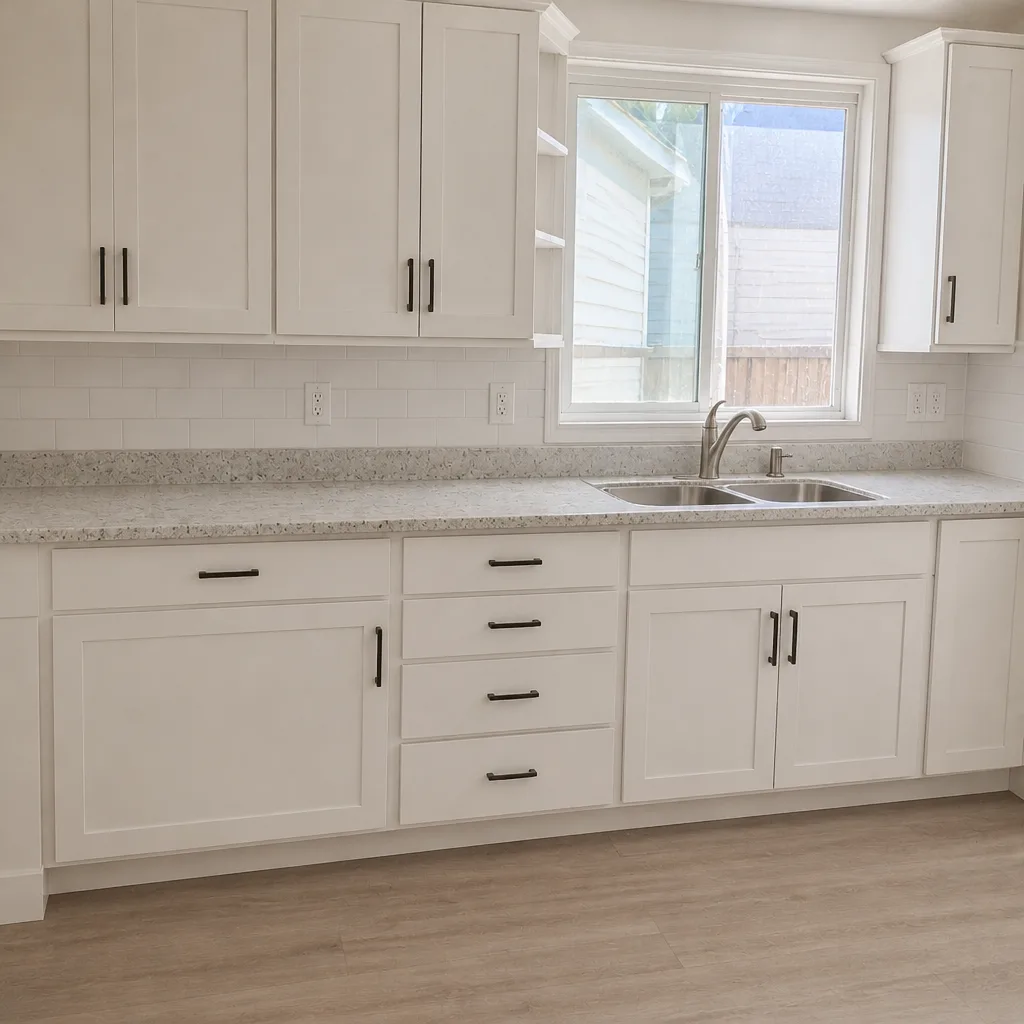
See the difference
 Before
 After
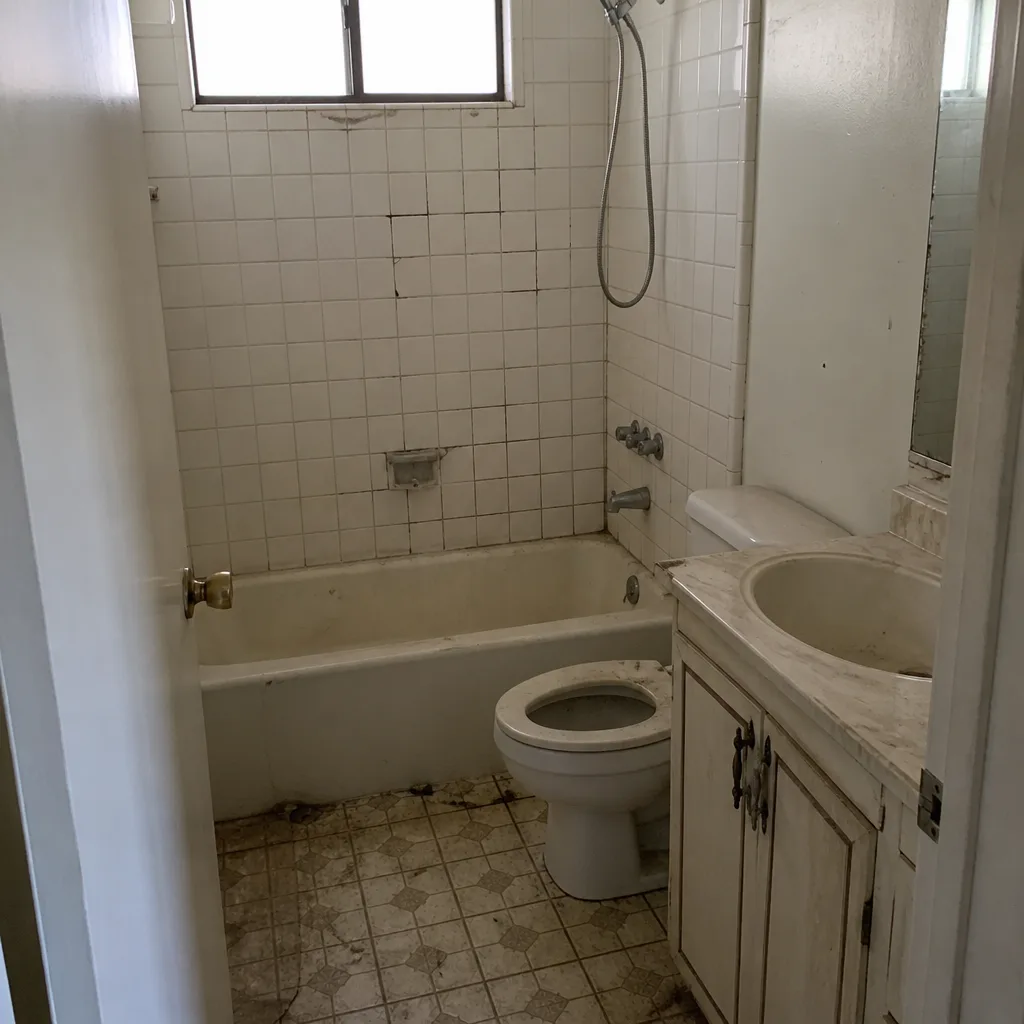
 Before
 After
 Before
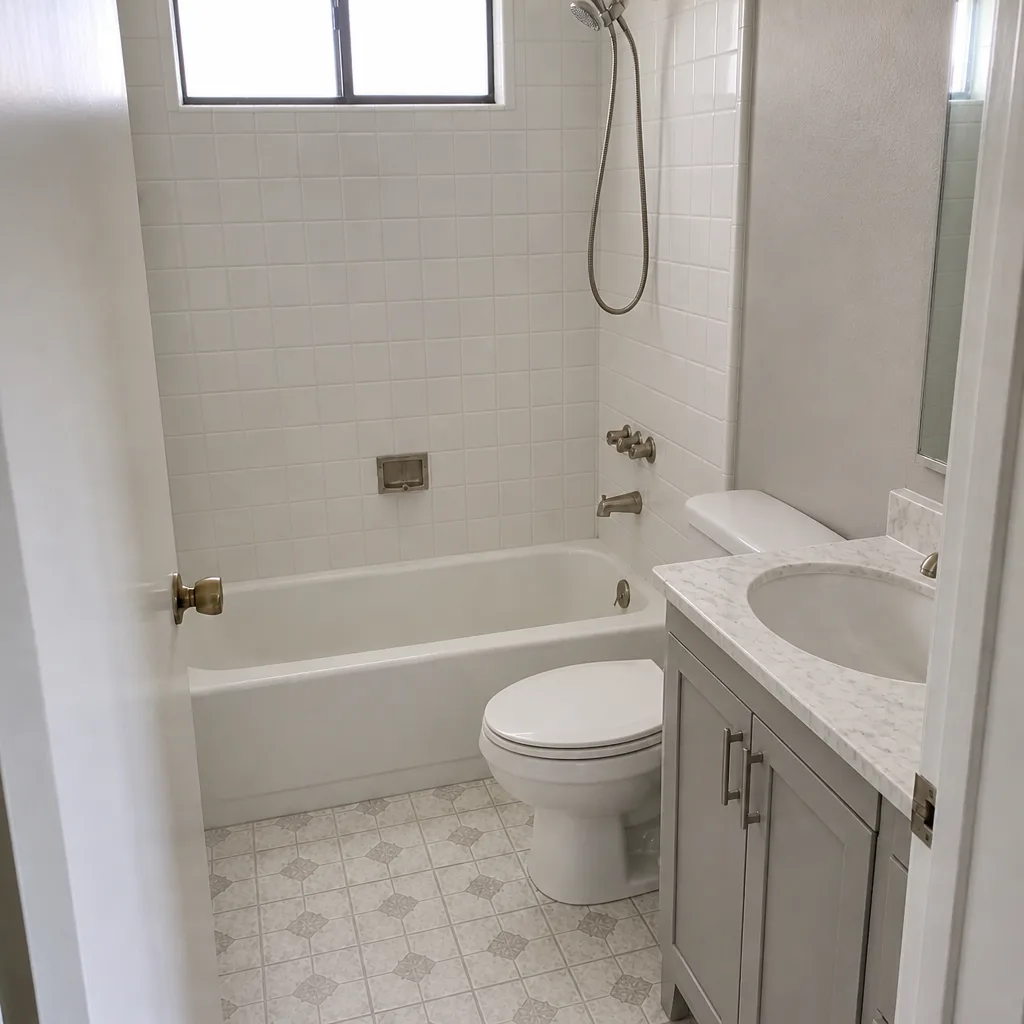 After
When to Call a Professional
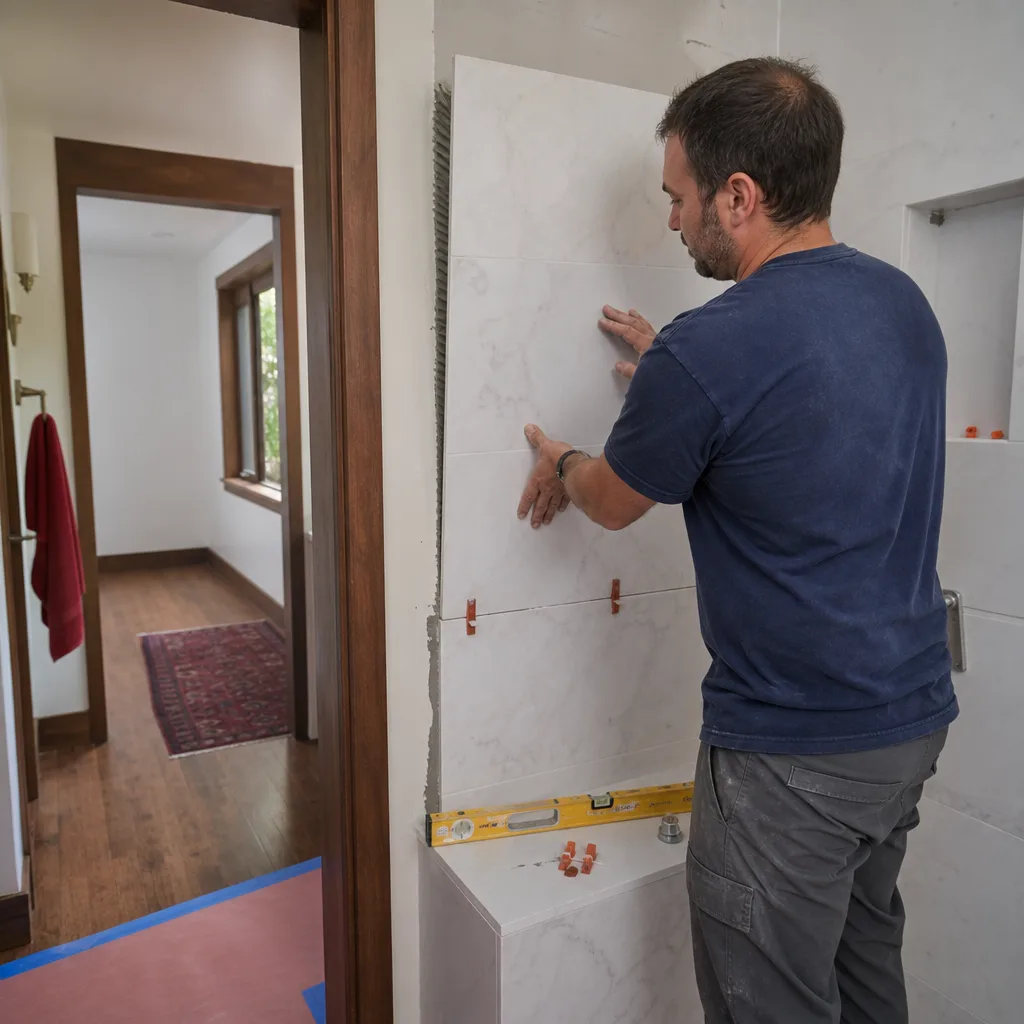
Call a pro when the work involves water behind the wall, the shower pan, the drain line, any electrical change beyond a straight fixture swap, or a permit. Call a pro when you’re planning a full bathroom remodel or a kitchen remodeling project and want a written price before work starts. And call a pro when you’ve already started a DIY job that’s getting away from you; the sooner the crew gets in, the less you replace. Penhallow Remodeling Santa Clarita offers free estimates in Santa Clarita. Call (866) 383-6693 to schedule yours.
We’re a general contractor working under The Kingswell Way: say the price before the work, show up in the window we gave, and leave the place cleaner than we found it. That means a written price before any work starts, not a verbal ballpark you can’t hold us to. Background-checked, uniformed technicians on every job. A live person answers the phone 24/7. And every project carries the 365-Day Done Right Promise: if the work fails inside the guarantee period, we come back and fix it at no charge, and the free return visit is included in writing on every job. If you want a second pair of eyes on the shower tile you just set, we’re happy to look at it before you finish. Free estimates, honest numbers, no pressure.
Frequently Asked Questions
Usually not, and the reason is waterproofing, not tile. The setting itself is learnable. The hidden layers are where bathrooms fail: the cement board substrate, the seams, the waterproofing membrane at the right thickness, the pre-slope on the pan, and the corner membranes. Those details aren’t in most tutorials, and they’re the ones that decide whether the job lasts. If you tile your own shower and the waterproofing is wrong, you’ll find out 18 to 24 months later. Call (866) 383-6693 for a free estimate if you’re weighing it.
No. A straight toilet swap in the same location, like-for-like, is a standard homeowner improvement and doesn’t require a permit in Santa Clarita. If you’re moving the toilet, changing the drain, or adding a bidet line, that’s a permit job because the plumbing rough-in changes. When in doubt, a permit is a cheap way to protect the value of your house, and a licensed contractor pulls it for you.
Usually more than the original professional bid would have cost, because you’re paying for demolition, disposal, and any rot repair on top of the rebuild. A full shower rebuild in Santa Clarita typically runs between $7,500 and $15,000 when the failure required framing or mold work, versus $5,500 to $11,000 for a shower built right the first time. Call (866) 383-6693 for an exact quote on your situation. Estimates are free.
Painting, hardware swaps, faucet and showerhead replacement, vanity light replacement (fixture-for-fixture), mirror and shelf installation, re-caulking, and re-grouting. These tasks fail visibly and the fix is usually a Saturday and a fresh tube of caulk. They’re also the tasks most likely to make a bathroom feel redone for a fraction of the cost.
Yes, and it’s one of the smartest splits we see. Demo is labor-heavy and low-skill, which means the DIY savings are real, and the risk is manageable with care around plumbing and electrical. Waterproofing, shower pan, tile setting, and drain work are where the value of a licensed crew is high. Call (866) 383-6693 to scope a split project. We’ll give you a written price before any work starts.
No, when you factor in a realistic chance of failure. A professional bathroom remodel in Santa Clarita runs roughly $14,000 to $28,000 for a hall bath, including permits and a written guarantee. Most DIY bathrooms that fail cost more than that original bid by the time the redo is finished, because you pay twice for the parts that failed. The pro bid is the cheaper option when you count the errors you don’t have to make. Call (866) 383-6693 and get a written number before you decide.
The Bottom Line
Bathroom DIY works when the failure is cheap and visible, and it doesn’t when the failure is invisible and structural. Painting, hardware, fixtures, and finishing are yours to enjoy. Waterproofing, shower pans, drain work, and any permitted change belong to a licensed crew, because the mistakes live behind the tile and take years to show up. Santa Clarita’s hard water and wide temperature swings make the “build it right the first time” advice more relevant here than in milder climates, and the local building department treats plumbing and electrical changes as permit work regardless of who owns the house. If you’re planning a remodel, a free estimate is the cheapest step you can take: a written number, a written guarantee, and a clear scope of what’s safe to do yourself.
To price your project, call Penhallow Remodeling Santa Clarita at (866) 383-6693. We’ll give you a written price before any work starts, walk you through what we’d recommend you DIY and what we’d keep on the crew, and back the work with the 365-Day Done Right Promise. Start with our bathroom remodeling in Santa Clarita page for the full scope, or see our kitchen remodeling in Santa Clarita service if the project is bigger than one room. For a broader overview of how we work, visit the Penhallow Remodeling Santa Clarita home page or our general contractor in Santa Clarita page.
Written by the team at Penhallow Remodeling Santa Clarita.